

The Director-General and Chief Executive Officer of the National Institute for Hospitality and Tourism (NIHOTOUR), Dr. Abisoye Fagade, has called for a strategic repositioning of Nigeria’s tourism sector as a major engine of economic diversification, job creation and human capital development.
Fagade said Nigeria had all the essential ingredients for a globally competitive tourism industry, but warned that the country must move beyond simply possessing tourism attractions to building the skills, institutions, infrastructure and coordination required to turn the sector into sustainable economic wealth.
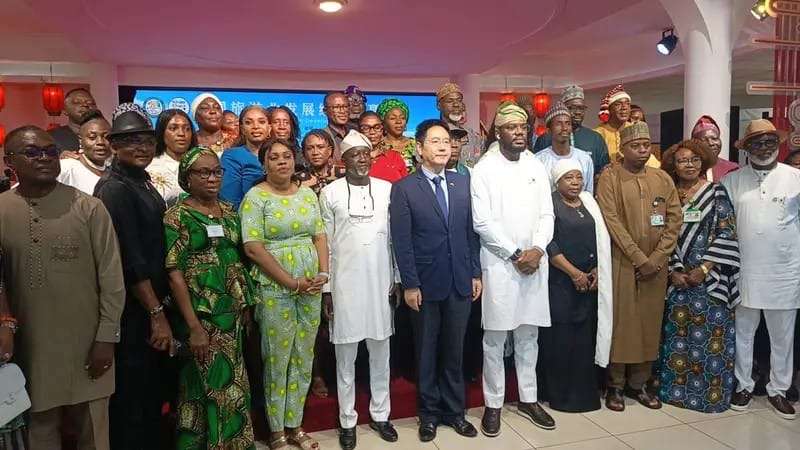
He spoke yesterday in Abuja at a seminar on China’s tourism development experience organised by the Chinese Cultural Centre in partnership with NIHOTOUR and the Nigerian Tourism Development Authority (NTDA).
The NIHOTOUR boss said tourism had become increasingly important to the Federal Government’s economic agenda under President Bola Ahmed Tinubu’s Renewed Hope Agenda, particularly its emphasis on employment, enterprise, investment, human capital development and diversification away from dependence on traditional sources of revenue.



“This seminar comes at a particularly significant time for Nigeria. Under the Renewed Hope Agenda of President Bola Ahmed Tinubu, our nation is pursuing a new economic direction in which job creation, human capital development, enterprise, investment and diversification are central to building a stronger and more prosperous Nigeria. Tourism has a critical role to play in that vision,” he said.
Fagade, who recently participated in a tourism development programme in Beijing, said China’s experience had demonstrated that tourism could be deliberately deployed as a tool for economic development, rural revitalisation, cultural preservation, skills development and community prosperity.
He said the lesson for Nigeria was clear: the country’s problem was not a lack of tourism assets but its inability to consistently convert those assets into economic value.
“Nigeria has the culture. Nigeria has the people. Nigeria has the destinations. What we now need is the capacity, coordination and commitment to turn these assets into prosperity,” he said.
The NIHOTOUR director-general stressed that strengthening professionalism in the hospitality and tourism industry was central to achieving the desired transformation, noting that the NIHOTOUR Act provided an important foundation for skills development, professional standards and institutional capacity.
“Our responsibility at NIHOTOUR is therefore not simply to train people. It is to help build the skilled workforce, professional culture and institutional capacity required to make tourism a serious contributor to the Nigerian economy,” he said.
He called for expanded Nigeria-China cooperation in tourism, particularly in professional training, curriculum development, tourism research, digital transformation, destination management, rural and cultural tourism and knowledge exchange.
Fagade specifically identified opportunities for stronger institutional partnerships with the China Association of Travel Services and the China Tourism Academy.
However, he cautioned Nigeria against attempting to replicate China’s tourism model wholesale, arguing that the country must adapt lessons from China to its own social, cultural and economic realities.
“China’s experience should not be copied mechanically. We should learn from what China has done, adapt the lessons to Nigeria’s realities, and build a uniquely Nigerian tourism model,” he said.
He said the ultimate objective should be to translate tourism opportunities into jobs, investment, stronger institutions and measurable improvements in the lives of Nigerians.
Speaking at the event, Counsellor at the Chinese Embassy, Yang Jianxing, said Nigeria and China possessed enormous tourism potential, given their rich histories, diverse cultures and abundant natural and cultural resources.
Yang described tourism as a bridge between nations and civilisations, saying deeper tourism cooperation between Nigeria and China could strengthen economic ties while promoting people-to-people understanding.
“I believe that tourism not only creates jobs and fosters economic growth but also brings people from different countries closer together, enabling them to understand and appreciate one another,” he said.
He said China was prepared to deepen exchanges with Nigeria in tourism talent development, vocational education, hotel management, eco-tourism, cultural heritage preservation, tourism digitalisation, destination marketing and business partnerships.
According to him, China’s experience in public tourism services, destination development, smart tourism, market promotion and talent development could provide useful areas for mutual learning.
Yang, however, emphasised that the objective was not to impose a Chinese model on Nigeria but to encourage two-way learning and cooperation that would benefit both countries.
He said stronger tourism cooperation would complement existing bilateral ties in culture and education and create new opportunities for investment and people-to-people exchanges.
Also speaking, the Director-General of the NTDA, Dr. Ola Awakan, said China’s emergence as one of the world’s leading tourism destinations offered important lessons for Nigeria’s efforts to unlock the sector’s economic potential.
Awakan, who is currently in China on a working visit to engage tourism institutions and stakeholders, was represented at the seminar by the Director of Human Resources Management, Mr. Oladipo Adekunle.
He said China had demonstrated how a properly developed tourism industry could contribute significantly to economic diversification, cultural diplomacy and sustainable development.
“We therefore see this seminar not merely as an opportunity to share experiences, but as a platform to identify practical areas for enhanced cooperation, including tourism investment, capacity building, destination development, cultural exchanges, research, innovation and increased tourist flows between our two countries,” Awakan said.
He assured stakeholders that the NTDA would continue to pursue partnerships capable of making Nigeria a more competitive, attractive and sustainable tourism destination.
The seminar therefore ended with a shared emphasis on moving Nigeria-China tourism relations beyond dialogue towards practical cooperation in skills development, investment, digital innovation, destination development and increased tourist flows.
For Nigeria, the central challenge, as highlighted by the speakers, is no longer whether the country possesses the attractions to support a thriving tourism industry, but whether it can build the systems and institutional capacity needed to turn those attractions into jobs, investment and sustained economic growth.






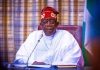





, Dr. Abisoye Fagade…)