Nigeria has perfected a strange cruelty: we vote, and then we watch our vote get repackaged after it has been used. We queue under the sun. We argue policy in the language we have, sometimes refined, sometimes raw. We pick a platform, a symbol, a promise. We hand a man the mandate to represent us, or they hijack it, not as a wandering individual but as a bearer of a particular direction. Then, halfway into the term, he walks into another party, smiles for photographs, and speaks as though nothing sacred has been violated. He keeps the seat. He keeps the salary. He keeps the influence. He keeps the microphone. The only thing he discards is the pact. And we are expected to call this “politics.” No. This is mandate trafficking. Because what is a mandate if it is not a contract? A mutual contract between citizens and representatives: specific promises, measurable expectations, time-framed deliverables. Four years. A term. A window of accountability. The people commit. The representative commits. You don’t get to unilaterally bend the contract midstream and still demand the benefits of the original agreement.
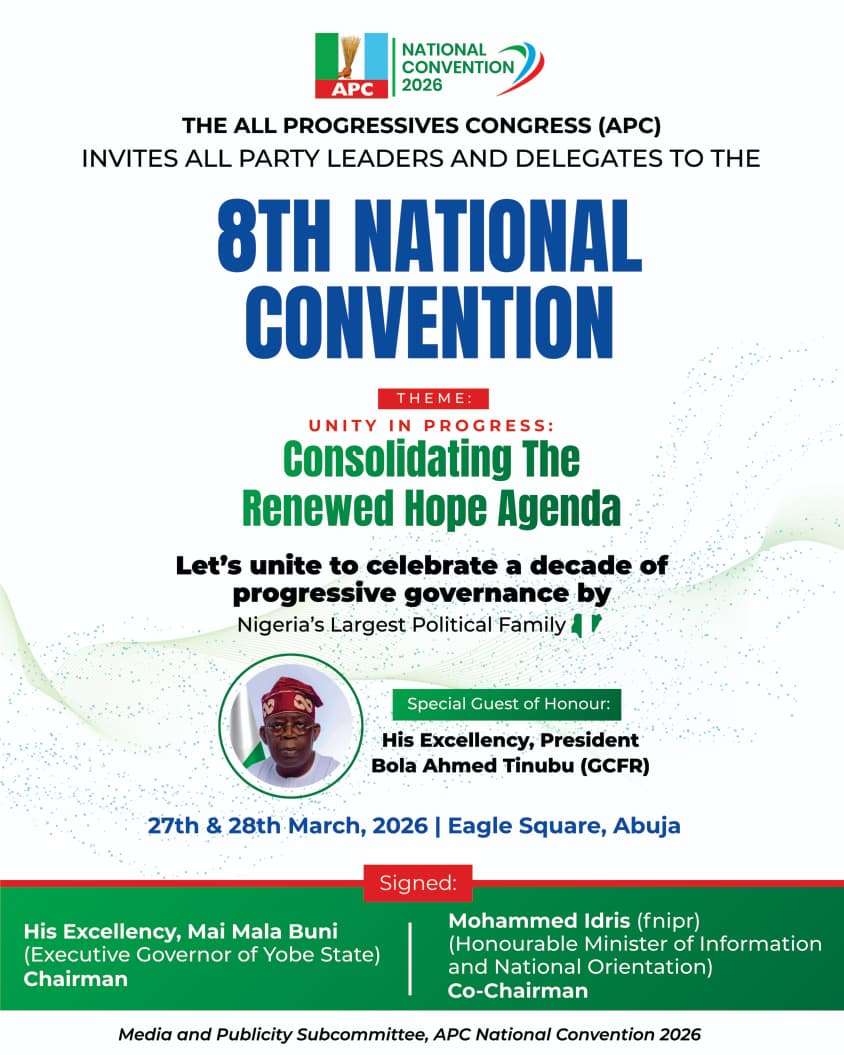
Yet that is exactly what has become routine. A governor is elected under the Peoples Democratic Party (PDP) and suddenly appears under the All Progressives Congress (APC). A senator enters the chamber on one platform and becomes, without returning to his voters, a soldier of another party. A House of Representatives member campaigns as opposition and transforms into the government’s chorus without a fresh vote cast in his constituency. It is as if our ballots are simply travel tickets politicians can use to enter the building, after which the building belongs to them. And the scale is no longer small enough to dismiss as isolated misbehaviour. We have been living through a season in which, within a single year, at least five serving governors moved from opposition parties or formally aligned with the ruling All Progressives Congress, with the Peoples Democratic Party bleeding most of the losses as the most enduring opposition structure since 1999. At the federal level, the drift has been dramatic: more than 140 elected officials, senators, and members of the House of Representatives have reportedly shifted toward the ruling party’s orbit since May 2023. Numbers like that do not merely change party registers; they change the architecture of accountability. Oversight begins to limp. Opposition begins to stutter. The legislature begins to sound like it is clearing its throat before speaking. Bills that should be scrutinized stroll through the chamber. Controversies that should provoke moral fire are reduced to procedural murmurs. And then we look around and ask why governance feels like one long, slow monologue. Because in a democracy, competition is oxygen. Defections drain the oxygen. You can see the symbolism of this moment in how defections are performed. Not quiet, not apologetic, not reflective, but performed. Flags removed. Flags raised. Chants rehearsed. Loyalty displayed as theatre, as if the purpose is not merely to change platforms but to humiliate the very electorate that chose the earlier platform. It is political pageantry designed to send a message: “Your vote got me here, but it cannot keep me there.”
And when citizens rage, politicians offer two anesthetics. The first is cynicism: “There is no ideology in Nigeria anyway.” Yes, our party system is often painfully shallow. Yes, parties can look like vehicles rather than institutions. Yes, there are days you cannot tell the philosophical difference between a slogan and a stance. But even in an ideologically thin environment, platforms still matter because they organise power. They shape alliances, legislative voting blocs, oversight posture, and the direction of public policy. Even weak ideology is still an axis. When you defect, you shift the axis. You do not merely change colour; you change the mathematics of government. The second anesthetic is constitutional escapism: “Freedom of association.” Freedom of association is real. But public office is not a private club. When you accept an election under a party sponsorship, you are accepting more than a personal job offer. You are accepting the terms of representation. Democracy is not only the right to choose; it is the duty to honour the choice for the time agreed unless the people themselves revoke it through lawful means. If you cannot honour it, the ethical remedy is simple: resign and seek a fresh mandate under your new platform. Let the people decide whether they agree with your new conviction.
The painful irony is that Nigeria’s Constitution is not entirely blind to this. For legislators, the Constitution of the Federal Republic of Nigeria 1999 (as amended) tries to curb this mandate theft. Section 68 subsection (1) paragraph (g) provides that a member of the Senate or the House of Representatives must vacate his seat if, being elected on the sponsorship of a political party, he becomes a member of another political party before the end of the term, except where the defection is caused by a division in his original party or a merger involving it. Section 109 subsection (1) paragraph (g) provides the same restraint for members of State Houses of Assembly. So the law, at least on paper, understands the moral logic: the seat is tied to the platform. But our political class has discovered how to mock a law without repealing it: stretch the exception until it becomes the rule. “Division” becomes a magic word. A quarrel becomes a “division.” A denied ticket becomes a “division.” A fight with a party chair becomes a “division.” And because enforcement is slow, because political time runs faster than judicial time, because presiding officers can delay what they do not want to declare, defectors often carry on with the confidence of people who know the system will negotiate with their misconduct. This is where the judiciary must also be named, not insulted, not demonised, but challenged. Courts cannot save democracy by giving interpretations that defeat democratic intent. When judicial reasoning becomes so technical that it creates escape routes for political betrayal, it may be legally elegant and democratically disastrous. When rulings leave the electorate without timely remedies, when sanctions become delayed until they are useless, when definitions become so pliable that “division” becomes whatever ambition requires, the law becomes theatre, just another stage on which politicians perform impunity. A democracy does not only need laws. It needs laws that bite within the term they are meant to protect.

Defection is the headline. But the engine is deeper: a political recruitment system that produces politicians who do not truly belong anywhere, and institutions that cannot or will not restrain them when they misbehave. We must say it plainly: in too many places, the road to candidacy is not competition; it is transaction. Tickets are bought. Delegates are induced. Primaries are allocated. Lists are drafted. Powerful “party leaders” behave like owners, and parties behave like private companies. In such a system, membership is not an ideological commitment; it is a temporary partnership. People invest heavily to enter office, sometimes borrowing, sometimes selling assets, sometimes tying themselves to obligations that are not public and not moral. Once elected, governance becomes repayment, not service. And when the office holder is in opposition, the pressure to defect becomes a survival tactic in a debt-driven political economy. So when we ask, “Why are they defecting?” we must also ask, “What did they join in the first place?” Many were never institutionally rooted. They were ticket-bearers, not party-builders. They entered politics not through conviction but through access. And access is always looking for the nearest door. Access politics must be heavily discouraged for true democracy to thrive in Nigeria. That is why defections gravitate toward federal power. Nigeria’s political arrangement is highly centralised; federal might often feel like the difference between safety and exposure, between relevance and marginalisation. The ruling party becomes not only a political home but, for some, a shield against political isolation, against institutional pressure, sometimes against accountability. Whether every accusation is provable is not the central point; the central point is that the belief has become an organising logic. Politicians move as though power can protect them, and too often, reality rewards that belief. Nigeria!
Now, let us confront the heart of the legal failure. The Constitution of the Federal Republic of Nigeria 1999 (as amended) tries to punish legislative defection, but it does not sufficiently punish executive defection. Legislators are theoretically constrained by section 68 subsection (1) paragraph (g) and section 109 subsection (1) paragraph (g), while governors and other executive office holders can defect midstream and carry the state’s political machinery with them, largely facing moral outrage but few direct legal consequences. That imbalance is a structural invitation to chaos: it tells the most powerful subnational actors that they can change the contract without returning to the contracting party, the electorate. This is why constitutional reform cannot be treated as a luxury. It is now a democratic necessity. Nigeria must amend its constitutional framework so that defection, especially by executive office holders, faces clear, enforceable consequences. If a governor defects midstream, the people should not merely complain on the radio. The law should recognise that an executive mandate is also platform-based, and that a midstream platform switch is a fundamental alteration of the contract. The democratic remedy should be revalidation: resignation and recontest, or a clearly provided legal mechanism that returns the question to the electorate within the term. But even the legislative provisions we already have have been weakened by interpretation and enforcement. The judiciary must be taken to task not because judges should become politicians, but because judicial choices shape democratic outcomes. When courts interpret anti-defection provisions in ways that expand loopholes, when rulings place procedural hurdles so high that enforcement becomes impractical, when the language of the Constitution is treated like a puzzle to be solved for politicians rather than a shield for voters, democracy is harmed. The judiciary must recognise that time is part of justice in electoral matters. A decision delivered after the term is almost over may be intellectually neat and democratically useless.
And beyond interpretation is speed. A sanction that takes three years to land in a four-year term is not a sanction; it is a suggestion. Defection cases must be handled with the urgency of election petitions. If Nigeria can fast-track disputes about votes, Nigeria can fast-track disputes about mandate theft. This requires procedural reforms, judicial discipline, and institutional courage. But the courts are not alone. Law enforcement and regulatory institutions must also stop treating political wrongdoing as untouchable. The Independent National Electoral Commission must be strengthened, not only to conduct elections but to effectively regulate party processes, enforce internal party democracy requirements, and sanction parties and actors that reduce primaries to auctions. Political parties must be compelled to operate as institutions rather than as godfather estates. Internal dispute resolution mechanisms must be real, not ceremonial. When every crisis requires the intervention of a president or a governor, what you have is not party democracy; it is command politics wearing civilian clothes. Still, even the best reforms will fail if citizens remain spectators. This is where the electorate must rise, not as a mob, but as owners. The mandate is not a gift. It is not a favour. It is a contract. And contracts require enforcement by the contracting party. Citizens must begin to behave like shareholders, not fans. Your representative is not your celebrity; he is your contractor. The contract is time-framed. The deliverables are measurable. The promises are specific. The platform is part of the agreement. If he changes the platform, he has changed the agreement. If he changes the agreement without consent, he has breached the contract.
So what does citizen defence look like? It looks like refusing to celebrate defectors. It looks like constituency pressure, town halls, petitions, organised civic engagement, and relentless media scrutiny. It looks like treating defection as a disqualification in the court of public opinion. It looks like recall mechanisms being discussed seriously, not as myths. It looks like citizens demanding legislative amendments that make defection trigger immediate consequences. It looks like professional bodies and civic groups framing the national conversation ahead of 2027, forcing parties and candidates to respond to issue-driven charters rather than defecting headlines. Because if citizens do not defend the mandate, politicians will continue to trade it. Nigeria does not need to become a one-party state in law to become one in practice. It only needs a culture where power attracts everyone, opposition collapses into cynicism, courts move too slowly to matter, and voters accept betrayal as normal. But betrayal is not normal. Betrayal is a choice. And so is resistance. In 2027, Nigerians must remember this: the ballot is not the end of democracy; it is the beginning of the contract. And any representative who treats the contract as adjustable, or who believes he can distort it unilaterally, must meet a citizenry that has finally decided to enforce its side of the agreement. The mandate must stop being merchandised.
TheConscienceChronicler.
Sincerely,
Godservant Tunde Kolajo
Jesus Gives Peace!
Stay ahead with the latest updates! Join The ConclaveNG on WhatsApp and Telegram for real-time news alerts, breaking stories, and exclusive content delivered straight to your phone. Don’t miss a headline — subscribe now!