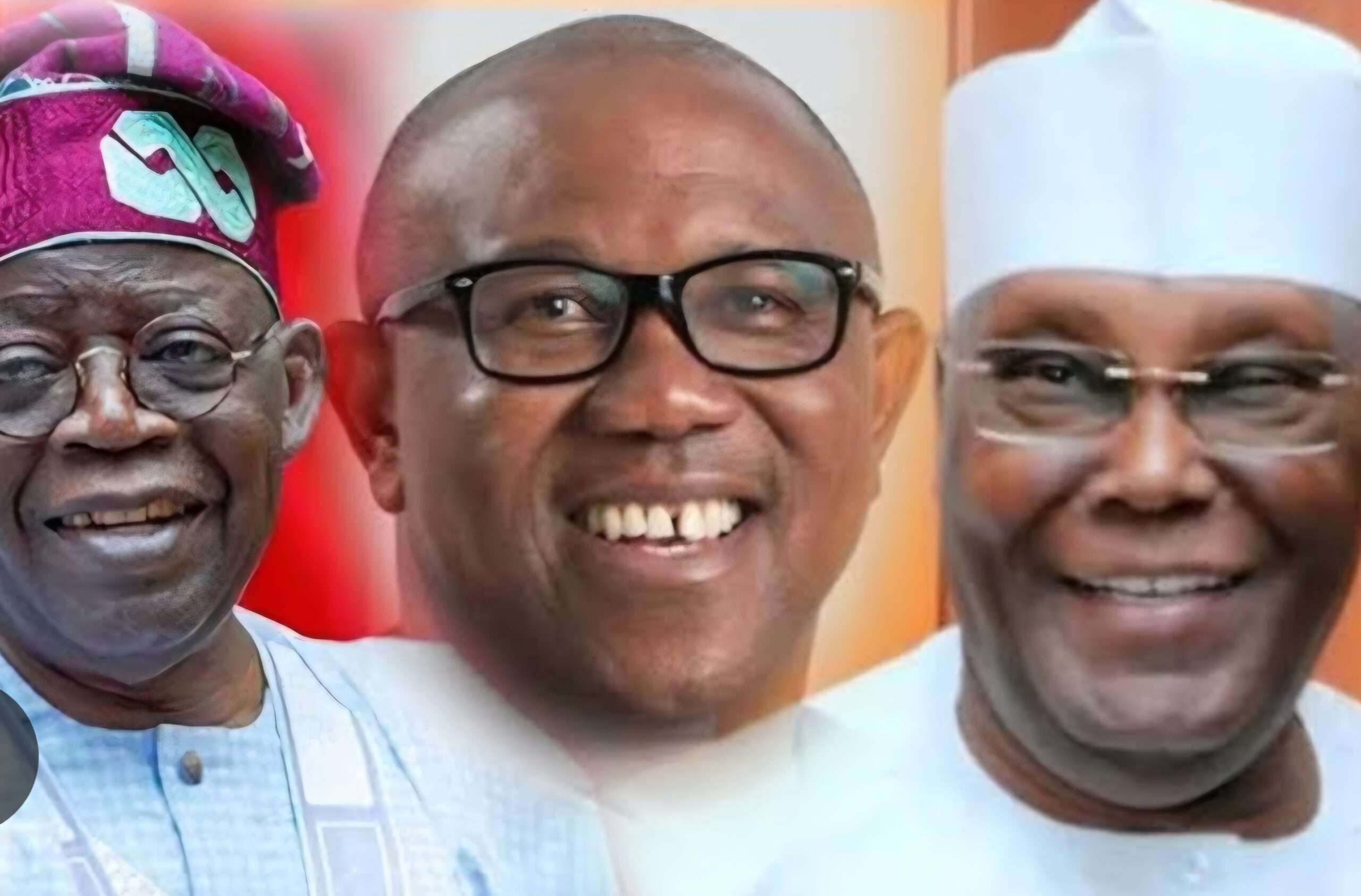
When your preferred presidential candidate comes seeking your vote in 2027, resist the temptation to support them simply because they share your tribe, religion or region. Instead, ask whether they possess the competence, vision and economic understanding required to govern Africa’s former largest economy.
Ask them what they understand.
Nigeria has spent decades electing leaders on the strength of personality, ethnicity, religion, political structures and campaign slogans. Yet none of these variables has built a globally competitive economy, strengthened the Naira, industrialised our productive sectors or protected our national wealth.

The office of the President is no longer merely a political office. It is the chief executive office of one of Africa’s largest economies. Whoever occupies it will supervise a multi-trillion-naira budget, negotiate billion-dollar international agreements, manage strategic national assets, influence monetary and fiscal coordination, and sign contracts whose consequences will outlive generations.



The standard for that office must therefore be competence, not charisma.
Every campaign rally, presidential debate, manifesto and town hall meeting should be judged against “Five Economic Equations”. Any candidate who cannot answer them with clarity, evidence and measurable policy has not demonstrated the competence required to lead Nigeria’s economic renewal in 2027.
Equation One: The Cost of Capital Equation
Nigeria cannot industrialise while productive businesses borrow at interest rates that make manufacturing commercially impossible. High financing costs suppress investment, discourage entrepreneurship, reduce factory expansion and ultimately increase unemployment.

Every presidential candidate should answer this question:
“What is your coordinated fiscal, monetary and industrial strategy for reducing productive lending rates to single digits while maintaining price stability, preserving investor confidence and avoiding financial instability? Explain the sequencing of your reforms and the expected timeline.”
Equation Two: The Value Addition Equation
Nigeria possesses one of the world’s largest proven natural gas reserves and enormous deposits of strategic minerals including lithium, gold, tin, barite, limestone, lead, zinc and rare earth elements. Yet too much of this wealth leaves our borders with minimal processing while other nations refine, manufacture and capture the highest-value jobs, technologies and export earnings.
Natural gas should power petrochemical industries, fertiliser plants, gas-based manufacturing, electricity generation and export-oriented industries. Our solid minerals should feed domestic refining, mineral beneficiation, battery materials, steel production and advanced manufacturing rather than being exported largely as raw commodities.
Every presidential candidate should answer this question:
“What specific fiscal incentives, industrial policies, infrastructure investments, financing mechanisms and technology partnerships will you implement to ensure that Nigeria captures substantially more value from its natural gas and solid mineral resources through domestic processing and manufacturing within your first 36 months in office?”

Economic transformation is not measured by the quantity of resources extracted from the ground. It is measured by the value retained within the domestic economy before those resources reach international markets.
Equation Three: The Foreign Exchange Equation
Exchange rates are not determined by political speeches. They are a reflection of productivity, export competitiveness, investor confidence, foreign exchange earnings and sound macroeconomic management.
Every presidential candidate should therefore answer:
“What combination of fiscal reforms, export diversification, import substitution, trade facilitation, anti-trade-misinvoicing enforcement and investment policies will place the Naira on a sustainable path towards appreciation while rebuilding foreign exchange reserves and restoring market confidence?”
Equation Four: The National Wealth Recovery Equation
Nigeria has become accustomed to discussing future revenues while paying insufficient attention to wealth that may already be owed to the Federation.
Following the 2018 consent judgment of the Supreme Court on the review of fiscal terms under the Deep Offshore and Inland Basin Production Sharing Contracts Act, the Federal Government demanded approximately US$62 billion from several International Oil Companies in additional revenues and accrued interest arising from the non-implementation of statutory fiscal reviews. Whether the eventual recoverable amount is higher or lower after negotiations is not the central issue.
The real issue is that Nigeria has never developed a permanent institutional framework for identifying, quantifying and recovering national wealth that may have been lost through weak contract enforcement, production-sharing disputes, transfer pricing, trade misinvoicing, underpaid royalties and other forms of financial leakage.
Every presidential candidate should therefore answer:
“Will your administration establish a National Wealth Recovery Programme staffed by the best of petroleum economists, forensic accountants, international tax specialists, contract lawyers, arbitration experts, data scientists and financial investigators with a mandate to recover every dollar lawfully owed to Nigeria by multinational corporations, enforce production-sharing agreements and royalty obligations, pursue unresolved fiscal claims, and strengthen Nigeria’s negotiating position in future extractive contracts?”
Recovering national wealth should become a permanent pillar of fiscal policy rather than an occasional political exercise.
Equation Five: The Sovereign Financial Defence Equation
Recovering wealth already lost is only half the solution.
The greater challenge is ensuring that Nigeria never loses such wealth again.
For decades, sophisticated financial provisions embedded in extractive contracts, production-sharing agreements, mining licences and investment treaties have often placed the Nigerian state at a structural disadvantage. Cost recovery provisions, stabilisation clauses, transfer pricing structures, complex tax arrangements and weak financial oversight have, in many cases, reduced the long-term value retained by the Federation.
Transparency after the event is no longer enough.
Nigeria needs a system that prevents financial leakages before contracts are signed.
Every presidential candidate should therefore answer this question:
“Will your administration establish a Sovereign Financial Defence Framework that subjects every major extractive contract and strategic public-private partnership to independent financial modelling, forensic cost verification, artificial intelligence-driven risk analysis and statutory pre-contract economic reviews to prevent predatory fiscal provisions, excessive cost recovery claims, abusive transfer pricing structures and other mechanisms capable of eroding Nigeria’s long-term wealth?”
The true measure of economic leadership is not how much money government recovers after damage has occurred.
It is how effectively government prevents that damage from occurring in the first place.
A Challenge to Nigeria’s Youth
The greatest responsibility in the 2027 election does not rest with politicians.
It rests with Nigeria’s young people.
Nigeria is one of the youngest nations in the world. Young Nigerians constitute the largest voting bloc and will live longest with the consequences of the decisions made in 2027. They have more at stake than any other generation in determining whether this country remains trapped in an extractive economic model or finally becomes a productive, industrial and globally competitive economy.
This election must therefore become the election where young Nigerians changed the questions.
Do not attend campaign rallies merely to chant slogans.
Do not allow yourselves to be divided by ethnicity, religion, region or political patronage.
Carry these Five Economic Equations into every campaign ground, every town hall meeting, every television debate, every radio interview and every social media conversation.
Ask every presidential candidate to answer them.
Listen carefully.
If the answers are vague, reject them.
If the answers are emotional rather than analytical, reject them.
If the answers contain promises without implementation frameworks, measurable targets or timelines, reject them.
Above all, if your preferred candidate cannot demonstrate a deep understanding of these five economic equations, have the courage to change your mind.
Democracy is not an exercise in loyalty to politicians.
It is an exercise in loyalty to the future.
Do not reduce your vote to an ethnic obligation.
Do not mortgage your future for temporary political excitement.
Vote for the candidate who understands how nations create wealth, retain wealth, recover wealth and defend wealth.
In 2027, the question is no longer “Who should govern Nigeria?”
The question is “Who has demonstrated the competence to engineer Nigeria’s sovereign economic renaissance?”
History will not remember how loudly we campaigned.
History will remember whether, when the opportunity came to change the trajectory of our nation, we demanded competence over convenience, evidence over emotion, and economic vision over political theatrics.
■ Odiaka Olika is a PhD Candidate in Development Finance at the Institute of Capital Market Studies, NSUK, Keffi. He serves as Senior Adviser on Economic Policy and Strategy to Dr. Gbenga Olawepo-Hashim and holds three master’s degrees in Finance, Strategy, and Financial Engineering.