What is choice, if not the quiet, unseen force that shapes the destiny of men, nations, and generations yet unborn?
It appears simple—merely the ability to decide, to select a path, to say “yes” or “no.” Yet beneath that simplicity lies a power so profound that it can build empires or reduce them to dust. Just as the tongue carries the weight of life and death, so too does choice carry the burden of consequence. A single wrong decision can cast a long, dark shadow over a generation; a single right one can light a path that others will follow for decades.
And so the question lingers, heavy and unavoidable: what is the quality of our choices?
Before every decision, there is a moment—brief, often ignored—where thought, conscience, and consequence gather quietly, waiting to be acknowledged. How often do we truly pause in that moment? How often do we weigh the cost against the gain, the temporary pleasure against the lasting impact? Choice is not merely about freedom; it is about responsibility. It demands reflection, discipline, and, above all, honesty with oneself.


Even the Divine, in infinite wisdom, granted humanity the gift of choice—not as a careless allowance, but as a sacred trust. Embedded within it is a system of balance: reward for what is right, consequence for what is wrong. But if choice is given, who then guides it? Is it conscience? Is it society? Is it the values we inherit, or the desires we nurture?
Choice, in its deeper expression, does not exist in isolation. It unfolds across layers of life—personal, organizational, societal, and national. Each category carries its own strength, its own philosophy, and its own consequences.
At the personal level, choice defines identity and destiny. The decision to pursue success, influence, or purpose begins as a quiet desire within. But desire alone is never enough. It is the quality of the steps taken—the discipline, the sacrifices, the consistency—that determines whether that desire becomes reality or fades into regret. Many dream, but only a few choose wisely enough, long enough, to see those dreams come alive.
Within organizations, choice shapes culture and legacy. The decisions made by leaders—whether driven by vision or vanity—determine whether an institution thrives or collapses. Integrity, accountability, and long-term thinking are not accidental traits; they are the products of deliberate choices made repeatedly over time. Where these are absent, dysfunction takes root.
Among people—communities and societies—choice becomes collective. It is reflected in shared values, norms, and the willingness to hold one another accountable. A society that chooses truth over convenience, justice over favoritism, and unity over division builds a foundation that can withstand the tests of time.
And at the level of nations, choice becomes destiny in its grandest form. Policies, leadership selection, institutional frameworks, and civic participation all emerge from a web of decisions. Nations that rise do so because they have chosen structure over chaos, discipline over excess, and vision over immediate gratification. Those that struggle often do so because their choices, over time, have been compromised by greed, short-sightedness, and disunity.
Choice is a compass. It can point toward purpose or toward ruin. It can construct or dismantle, elevate or degrade. It sharpens our ability to discern—right from wrong, truth from falsehood. And in those moments when we choose rightly, there is a deep, quiet fulfillment that no material possession can replicate. When we choose poorly, the emptiness that follows is just as profound.
Across the world, the evidence is undeniable. Nations that stand tall today did not arrive there by accident. Their transformation was not a stroke of luck but the result of deliberate, consistent, and often difficult choices. They built systems that work, institutions that endure, and societies that strive—however imperfectly—toward order and progress.
NAF airstrike hits Borno-Yobe border market, kills at least 10
People migrate toward such places, drawn not by illusion, but by the tangible results of thoughtful decision-making. Functional systems, strong institutions, and a culture of accountability do not emerge overnight; they are the harvest of years of intentional choices. Even where flaws exist, there is visible effort—effort to improve, to correct, to move forward.
And then, there is us.
A nation richly endowed, abundantly blessed—yet weighed down by the paradox of its own choices. The land is fertile, the potential vast, the promise undeniable. And still, the question echoes louder with each passing day: what went wrong?
Somewhere along the line, the process of choosing became distorted. Greed found its way in. Self-interest took the place of collective good. Values were traded for convenience, vision for immediacy. We began to allow fleeting ideas, shallow philosophies, and unchecked ambitions to dictate decisions that should have been guided by wisdom and foresight.
Our economy struggles under the weight of inconsistency. Our politics often strays from the true essence of representation, bending instead toward wealth and influence rather than competence and service. The social fabric frays, divided by class and status, where the burden of poor decisions falls disproportionately on the most vulnerable.
And yet, the power of choice has not been taken from us.
This is the paradox we must confront: if we still possess the ability to choose, why do we remain where we are? What happened to our collective resolve—the courage to say no, to resist, to demand better? Who benefits from the silence, and who suffers because of it?
The truth is both uncomfortable and liberating: change has never been beyond reach. It begins, as it always has, with choice.
A choice to think deeply rather than react impulsively.
A choice to prioritize the collective over the individual.
A choice to reject what is wrong, even when it is convenient.
A choice to stand, to speak, to act.
Transformation is not born from wishful thinking; it is forged in the furnace of deliberate decisions made consistently over time. It requires unity—not just in words, but in action. It demands that we sharpen our judgment, refine our values, and reclaim the power we so often surrender.
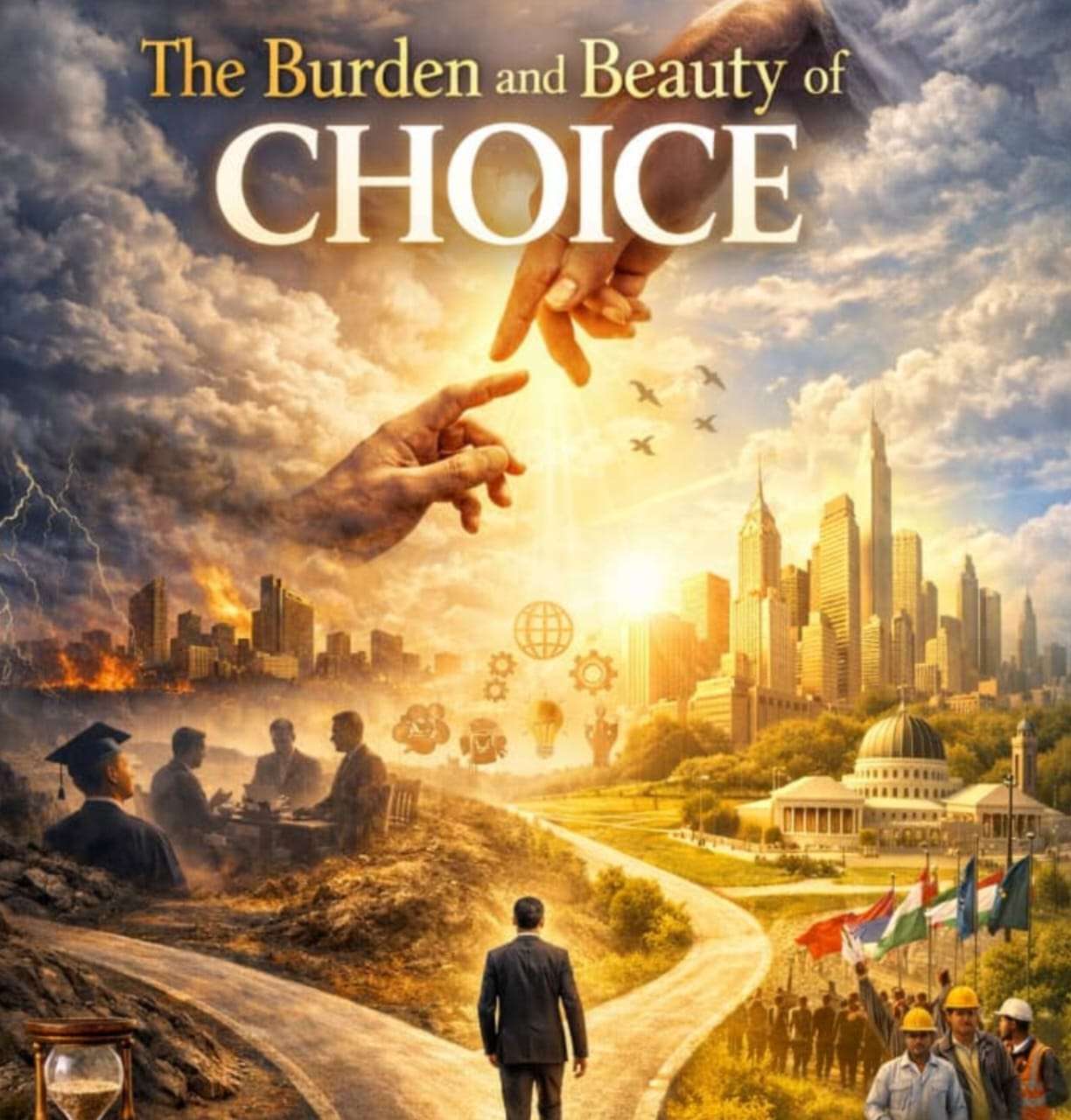
We stand today at a crossroads, whether we acknowledge it or not. One path leads deeper into frustration, stagnation, and pain. The other, though more difficult, leads toward renewal, dignity, and progress.
The difference between these paths is not fate.
It is choice.
And perhaps, just perhaps, the turning point we seek is not somewhere far away—but within us, waiting for the moment we decide, together, to choose differently.