● Stakeholders consulted as regulator moves to set new cost-reflective interconnection charges for voice, SMS, USSD
The Nigerian Communications Commission, NCC] has launched a review of Mobile Termination Rates, MTR, eight years after the last determination, saying the telecoms landscape has changed too much for the 2018 framework to remain relevant.
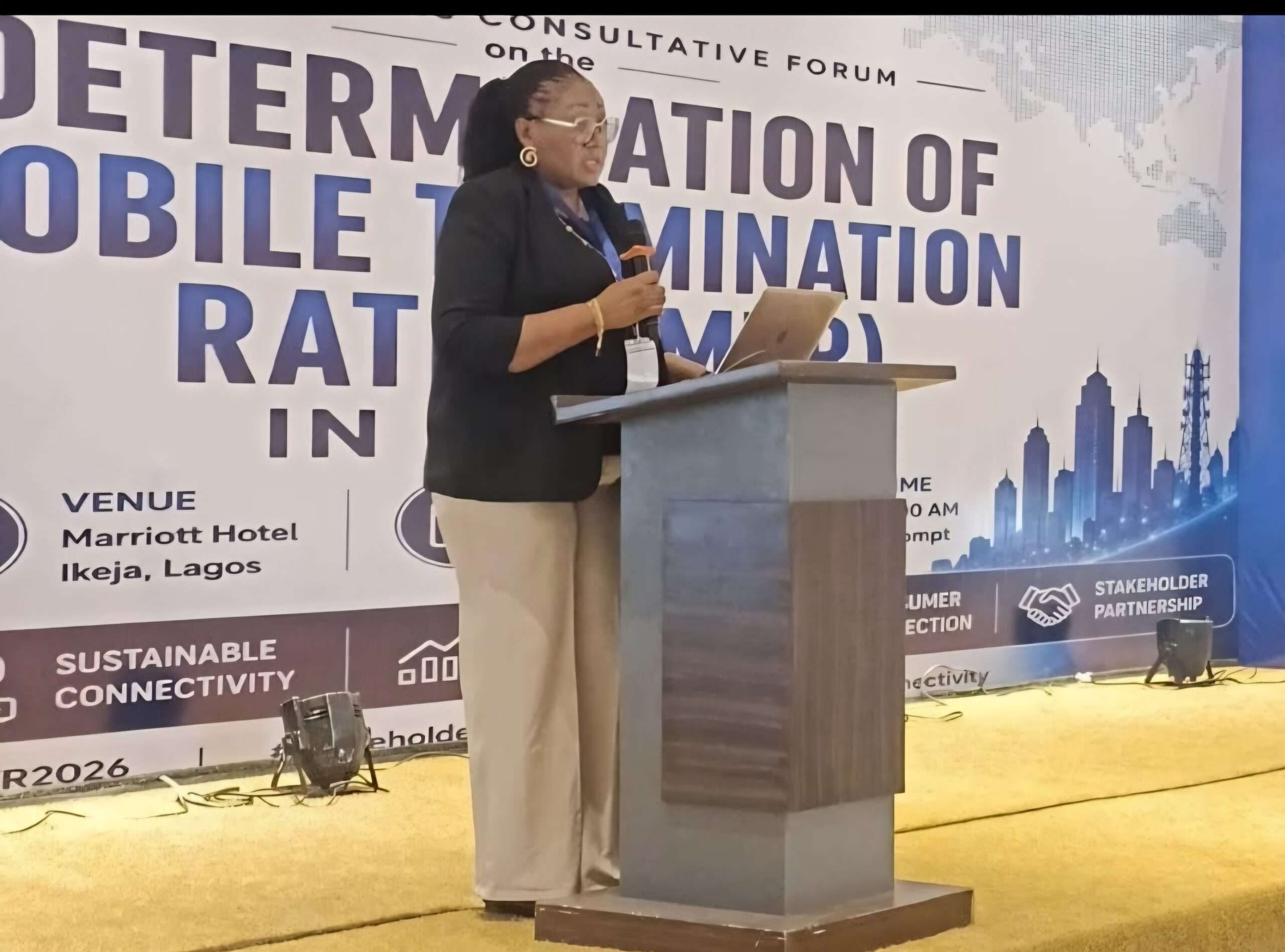
The regulator announced the move Tuesday at a stakeholders’ consultative forum on MTR determination in Nigeria.
–Why NCC is reviewing now-,




NCC’s Assistant Director, Policy Competition and Economic Analysis, Nkechi Araka, said the 2018 rate of N3.90 per minute no longer reflects market realities due to major shifts since then:
1. Technology shift: Rollout of 5G services and rise of Mobile Virtual Network Operators, MVNOs, have altered network costs and interconnection patterns.
2. OTT competition: Over-the-top providers like WhatsApp, Telegram are changing voice/SMS traffic volumes.
3. Consumer demand: Subscribers now expect “affordable, high-quality and always-available connectivity.”
4. Macroeconomic pressure: Exchange rate fluctuations and high inflation have significantly raised operators’ cost structures since 2018.
“The communications market has changed significantly since we did the last determination in 2018. Consumer demand has also evolved,” Araka said. “The commission believes now is the appropriate time to undertake this review because the current framework may no longer accurately reflect underlying costs and market realities.”
She noted the 8-year gap is unusual.
NCC typically reviews MTR every 3-4 years. International termination rates were reviewed in 2022, but MTR itself stayed at N3.90/min.
–What MTR means for Nigerians–
Mobile Termination Rate is the fee operators pay each other to complete calls on another network.
It affects:
1. Interconnection: How fairly networks connect and exchange traffic.
2. Consumer prices: Higher MTR can push up call/SMS tariffs. Lower, cost-based MTR can reduce them.
3. Competition & investment: Cost-reflective rates prevent unfair advantage and help operators recover efficient costs for termination services.
“A cost-based mobile termination rate supports a level play field by ensuring that no operator gains an unfair advantage through interconnection arrangements. It also promotes investment,” Araka explained.
–Scope of the review–
Anchored on Sections 96, 97 and 108 of the Nigerian Communications Act 2003, the study will:
1. Assess impact of the current interconnection regime
2. Develop updated wholesale and retail pricing framework
3. Determine cost-reflective MTR for voice, SMS, USSD
4. Review existing asymmetry regime that gives new entrants different rates
5. Set appropriate international termination rate for inbound traffic
6. Examine interconnection involving MVNOs and retail pricing controls
—What happens next—
NCC says the process will be evidence-based and transparent. Steps include: stakeholder consultations, data collection from operators, publication of interim findings for feedback, then a proposed new MTR framework.
For consumers, NCC expects the outcome to support affordable, sustainable services. For operators, it should provide regulatory certainty and rates that reflect today’s costs. For the market, it should encourage new entry and predictable signals for infrastructure investment.
The 2003 interconnection determination was Nigeria’s first. Reviews followed in 2006 and 2009 when asymmetry was introduced. The 2018 determination set the current uniform rate.