![[MONDAY WEEKLY COLUMN] Kauran Gwandu and the Politics of Development: Can Nasiru Idris Turn Performance Into Political Permanence? By Emmah Uhieneh](https://www.theconclaveng.com/wp-content/uploads/2023/10/Kebbi-1.jpeg "Kebbi")
Since assuming office in 2023, Nasiru Idris has governed with the urgency of a man determined not merely to occupy power, but to redefine perception. In a political environment where governors are often accused of grand announcements without corresponding impact, the Kebbi governor appears intensely conscious of optics, legacy, and public judgment. His administration has therefore evolved into more than a routine government; it is gradually becoming a deliberate political and developmental statement.
Popularly known as Kauran Gwandu, the former president of the Nigeria Union of Teachers entered office carrying both advantages and burdens. On one hand, he came with a grassroots reputation as a teacher, labour figure, and mobilizer with emotional appeal among civil servants and ordinary people. On the other hand, critics questioned whether a unionist could effectively transition into the complex realities of statecraft, fiscal management, infrastructure delivery, and high-level political negotiations within the ruling All Progressives Congress.
Rather than engage critics through endless political arguments, Idris appears to have chosen a different route: visible development as political language.
From the outset, his administration identified education not just as a policy sector, but as the ideological foundation of his government. This was strategic. As a former teachers’ union leader, education is the one area where failure would have been politically unforgivable. Consequently, the governor moved aggressively to establish an identity around schools, teachers, literacy, and institutional rebuilding. The construction of over a thousand classrooms, renovation of hundreds more, establishment of mega schools across emirate councils, and expansion of tertiary infrastructure were not isolated projects; they formed part of a broader attempt to institutionalize his image as a reform-driven governor with human capital at the centre of governance.



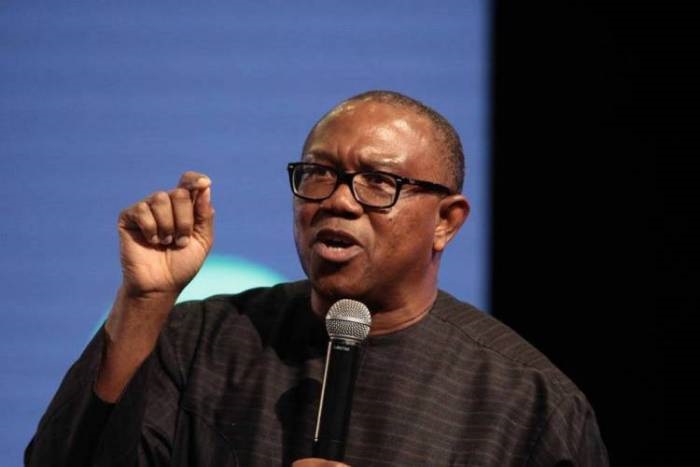
The free education policy from primary to tertiary level also carries significant political symbolism. In a state where poverty and educational access remain deeply interconnected, the policy projects compassion while simultaneously expanding political goodwill across households. Payment of tuition obligations for students within and outside Nigeria, assumption of WAEC and NECO fees, and increased subventions to institutions all reinforce a carefully cultivated message: government must reduce the social burden on citizens.
Yet perhaps the most politically intelligent aspect of his educational reforms lies in teachers’ welfare. By recruiting thousands of teachers, increasing the minimum wage to ₦75,000, extending retirement age, and strengthening literacy programmes for Almajiri children, Idris effectively consolidated a strategic constituency. Teachers remain one of the most influential social blocs in Northern Nigeria. They shape opinion at the grassroots, interact daily with families, and possess extensive community reach. For a governor with unionist roots, empowering them is both ideological and politically sophisticated.
Still, Idris understands that governance in contemporary Nigeria cannot survive on education alone. Roads, bridges, urban renewal, and visible infrastructure remain the most immediate evidence citizens use to measure seriousness in government. This explains the administration’s heavy investment in rural roads, township rehabilitation, flood control structures, and urban expansion projects. The ongoing transformation in places like Birnin Kebbi, Argungu, Yauri, and Zuru is designed not only to improve mobility and commerce, but to alter the visual psychology of governance in the state.
Infrastructure, in this context, becomes political communication.
For years, many northern states have battled the perception of stagnation, abandoned projects, and weak urban modernization. Idris appears determined to confront that narrative directly. The construction of secretariat complexes, modernization of motor parks, rehabilitation of public institutions, and commitment of tens of billions to capital projects all send a message that Kebbi intends to compete developmentally with more economically prominent states.
Agriculture equally occupies a central role in this political-developmental strategy. Kebbi’s economy is agrarian, and any governor seeking long-term relevance must engage the farming population beyond campaign rhetoric. Distribution of fertilizers, solar pumps, seedlings, livestock support, and agricultural interventions reflects an attempt to reconnect governance with the economic realities of ordinary citizens. More importantly, the administration consistently links agriculture to food security and rural stability, thereby framing farming not merely as economic activity, but as a security and survival issue.
This is particularly important given the security realities confronting parts of Northwestern Nigeria.
Banditry and rural insecurity have severely damaged local economies across the region. Idris understands that restoring confidence in farming communities is both developmental and political. By procuring patrol vehicles, motorcycles, operational support for security agencies, and emphasizing the return of communities to farming, his government seeks to project itself as proactive rather than reactive. In Northern politics, perception of security competence significantly influences political legitimacy.
What further distinguishes Nasiru Idris politically is his apparent understanding of federal dynamics and party relations. Unlike governors who constantly position themselves in confrontation with Abuja, Idris has adopted a cooperative but strategic posture within the APC power structure. He maintains loyalty to the party establishment while simultaneously building his own political capital through performance-based governance.
This balancing act is crucial.
In today’s Nigeria, governors survive politically through two interconnected currencies: federal alignment and grassroots legitimacy. Idris appears to be carefully cultivating both. His cordial relationship with power blocs within the APC, combined with developmental visibility at home, allows him to strengthen his standing without appearing excessively dependent on national figures.
Increasingly, he is also becoming visible beyond Kebbi’s borders. Within the orbit of the Progressive Governors Forum, Nasiru Idris is gradually emerging as one of the more vocal and publicly engaged governors. His growing presence at national political meetings, policy engagements, intergovernmental forums, and party activities suggests a governor consciously expanding his political relevance beyond state boundaries.
In many respects, he is beginning to function like an informal public relations ambassador for the APC governors’ bloc — consistently visible, publicly loyal, politically articulate, and eager to project the achievements of progressive governance. This growing national visibility may prove strategically important for his political future.
Why?
Because Nigerian politics increasingly rewards governors who combine local performance with national relevance. A governor who is visible within party structures often enjoys stronger institutional backing, broader elite acceptance, and increased political insulation during difficult moments. Idris appears to understand that development projects alone do not guarantee political longevity; they must also be accompanied by strategic relationships within the federal and party ecosystem.
The larger question now, however, is whether these developmental efforts and political consolidations will ultimately translate into a second term mandate.
Will the people of Kebbi be kind to him at the ballot box?
Will they see his projects not merely as government activity, but as evidence of sincere leadership deserving continuity?
Those questions may ultimately define the next phase of Kebbi politics.
For many observers, the answer may depend on whether citizens continue to physically feel the impact of governance in their daily lives. Roads, schools, salaries, security, healthcare, agricultural support, and welfare programmes are tangible realities that ordinary people easily connect with. In societies where governance has often been associated with abandonment and broken promises, visible projects naturally create emotional and political capital.
There is also the argument of consolidation.
Supporters of Idris increasingly frame his administration as a “work in progress” requiring continuity to fully mature. They argue that many of the reforms — especially in education, infrastructure, literacy integration, agriculture, and urban renewal — are long-term projects whose full benefits may only become evident over time. From that perspective, a second term would not merely be political compensation, but an opportunity to institutionalize and complete reforms already underway.
Critics, naturally, may still question the depth, speed, or sustainability of some projects. That is inevitable in democratic governance. But politically, Nasiru Idris appears to be constructing something stronger than rhetoric: he is attempting to build a performance-based argument for continuity.
And that may become his greatest electoral asset.
In an era where many politicians depend almost entirely on ethnic calculations, patronage networks, or elite bargains, Idris seems to be adding another dimension — developmental legitimacy. He is consciously trying to convince Kebbi people that governance can be seen, touched, measured, and experienced.
Whether that will ultimately guarantee a second term remains a matter for the electorate. But one reality is becoming increasingly difficult to ignore: Kauran Gwandu is governing like a man who wants history, not merely power. And in the complicated theatre of Nigerian politics, leaders who successfully combine development, visibility, party loyalty, and grassroots connection often become very difficult to dislodge.