Within the arena of modern Nigerian politics, the street phrase _“see finish”_ has grown from everyday slang into a cynical, weaponized strategy of realpolitik. In practice, it now functions as a doctrine of radical, adversarial exposure.
In everyday language, _see finish_ happens when you become so familiar with a person or institution that you lose all respect for them. You expose their flaws and break their spell of authority.
Historically, Nigeria’s political elite survived on an unwritten gentlemen’s agreement. It was a mutual indemnity pact: keep your bitterest rivalries behind closed doors while showing the public a united, dignified front.
The usual retort was that a political disagreement was a _”family affair.”_ An internal matter. A private problem that outsiders should not interfere with.



This unspoken covenant ensured that no matter how deep the betrayals ran, the ruling class always maintained an appearance of institutional respectability.
*The Wike Disruption*
That landscape has been completely redesigned by the Minister of the Federal Capital Territory, FCT, *Nyesom Wike*. He has turned _see finish_ into a strategy for political survival and relevance.
The _Wikerealpolitik_ style flatly rejects the polite, diplomatic language that has shielded Nigerian politicians for decades. Instead, it strips away political immunity and appearances. It openly exposes the transactional motives of both sides of the aisle.
This open _casting_ replaces elite politeness with a brutal, confrontational style of public truth-telling.
_Wikerealpolitik_ has rewritten the rules of Nigerian power. It shifts the burden of proof from moral oratory to physical, verifiable evidence of governance.
Yet, this approach raises serious concerns. Public governance is being reduced to personal warfare, and democratic institutions risk degradation in the process.
*Tearing Down the Giants*
A major goal of the strategy is to tear down national political giants. It strips them of their moral high ground and shows them as ordinary, often biased litigants in the court of power.
For years, major opposition leaders were treated by their followers as untouchable, apotheosised patriotic figures above regular politics.
_Wike realpolitik_ shattered that illusion during his latest media broadcast. He dragged heavyweight leaders like *Atiku Abubakar* and *Peter Obi* directly into the political trenches.
By bluntly declaring that these opposition figures would “hunt” him down if *President Bola Tinubu* loses the 2027 election, he reframed their goals. It was no longer a noble rescue mission for Nigeria, but a personal, vindictive grudge match.
Through this clever use of _see finish_, he denies his rivals the ability to claim the moral high ground. He presents them to voters as politicians simply looking to settle old scores.
By arguing that everyone in the political arena is playing the same transactional game, he establishes a parity of motive. He forces the public to view the 2027 election with absolute, clear-eyed realism.
However, this strategy is inherently reductionist. By insisting that all political motives are base and transactional, he poisons public trust in leadership and delegitimizes the very concept of principled political opposition.
*Infrastructure as Shield*
Furthermore, playing the game of _see finish_ carries massive risk. If you teach the public to look at politicians with deep cynicism, they will eventually look at you with that same critical eye.
To protect himself from the cynicism he creates, _Wikerealpolitik_ relies on a defense built on concrete, visible performance. It treats infrastructure as the ultimate exculpatory evidence.
He appears to be on terra firma here. Nigerians have _seen finish_ with empty promises, political manifestos, and flowery speeches. So he anchors his political life in physical and verifiable projects.
His governance works on a simple premise: a cynical voter can question a politician’s integrity, but they cannot ignore a brand-new highway, a modern school, a hospital, comfortable transit hubs, or a flyover that eases traffic.
By constantly reminding everyone of his track record — building 12 flyovers as Governor of Rivers State or completing 76 infrastructure projects in the FCT — he shifts the case. It moves from a trial of moral intentions to a verdict based on physical reality.
The counter-argument, however, is that this “brick-and-mortar” jurisprudence ignores deeper, systemic components of governance. These include human capital development, institutional integrity, and the rule of law.
A city cannot be paved over its broken democratic processes. And the transactional focus on infrastructure can serve as a convenient distraction from the lack of a cohesive, long-term policy vision for structural reform.
*Friendly Fire Within the APC*
Importantly, _Wikerealpolitik_ does not just use this weapon against the opposition. He turns it with equal force on his own allies within the ruling *All Progressives Congress, APC*.
He breaches the implied contract of intra-party solidarity.
In traditional Nigerian politics, disagreements within the ruling party are settled quietly through backchannel arbitration. The goal is to keep up the appearance of a unified front.
Wike breaks that tradition by airing the party’s dirty laundry in public. He openly names powerful figures like *Kwara State Governor AbdulRahman AbdulRazaq* and *Imo State Governor Hope Uzodinma* as people working against him under the radar.
By exposing these elite cracks, he shows that the ruling party is not a united family driven by a single vision. It is a loose alliance of competing interests.
This style creates permanent leverage for the FCT Minister. It ensures his position in the cabinet remains safe because colleagues know that any attempt to sideline him will result in immediate, public exposure of the party’s _holy of holies._
This survival mechanism, while effective, reveals a chaotic and unstable governing style. It prioritizes self-preservation over administrative stability and team cohesion.
*The Cost and the Test*
Ultimately, the _Wikerealpolitik_ of _see finish_ has permanently changed how power is negotiated and held in modern Nigeria. But it comes at a profound cost to the political ecosystem.
By destroying the old illusions of elite unity, he has ushered in an era of aggressive transparency. Power is now fought for out in the open through leverage and infrastructure, rather than quiet consensus.
While this style wins Wike a fiercely loyal base of everyday supporters who love his “talk-and-do” reputation, it also creates a massive, dangerous coalition of powerful enemies across all political parties.
By stripping away the traditional respect and protection politicians usually give one another, _Wikerealpolitik_ has ensured that if he ever loses political footing, his adversaries will show him absolutely no mercy.
As the country moves closer to the 2027 elections, _Wikerealpolitik_ will serve as the ultimate test case for Nigerian realpolitik. It will prove whether concrete performance is enough to save a politician from the collective anger of a demystified political elite, or if a divisive, scorched-earth methodology will lead to ultimate political isolation.
As the different political calculus changes and new jurisprudential formats emerge, it is hoped that a genuine Nigerian-formatted political ecosystem will emerge.
This will place emphasis on infrastructural optics mixed with human capital development, institutional integrity, advancement of democratic processes, and the rule of law.
Surely there is enough for students and academics to chew on. Indeed, these are interesting times.
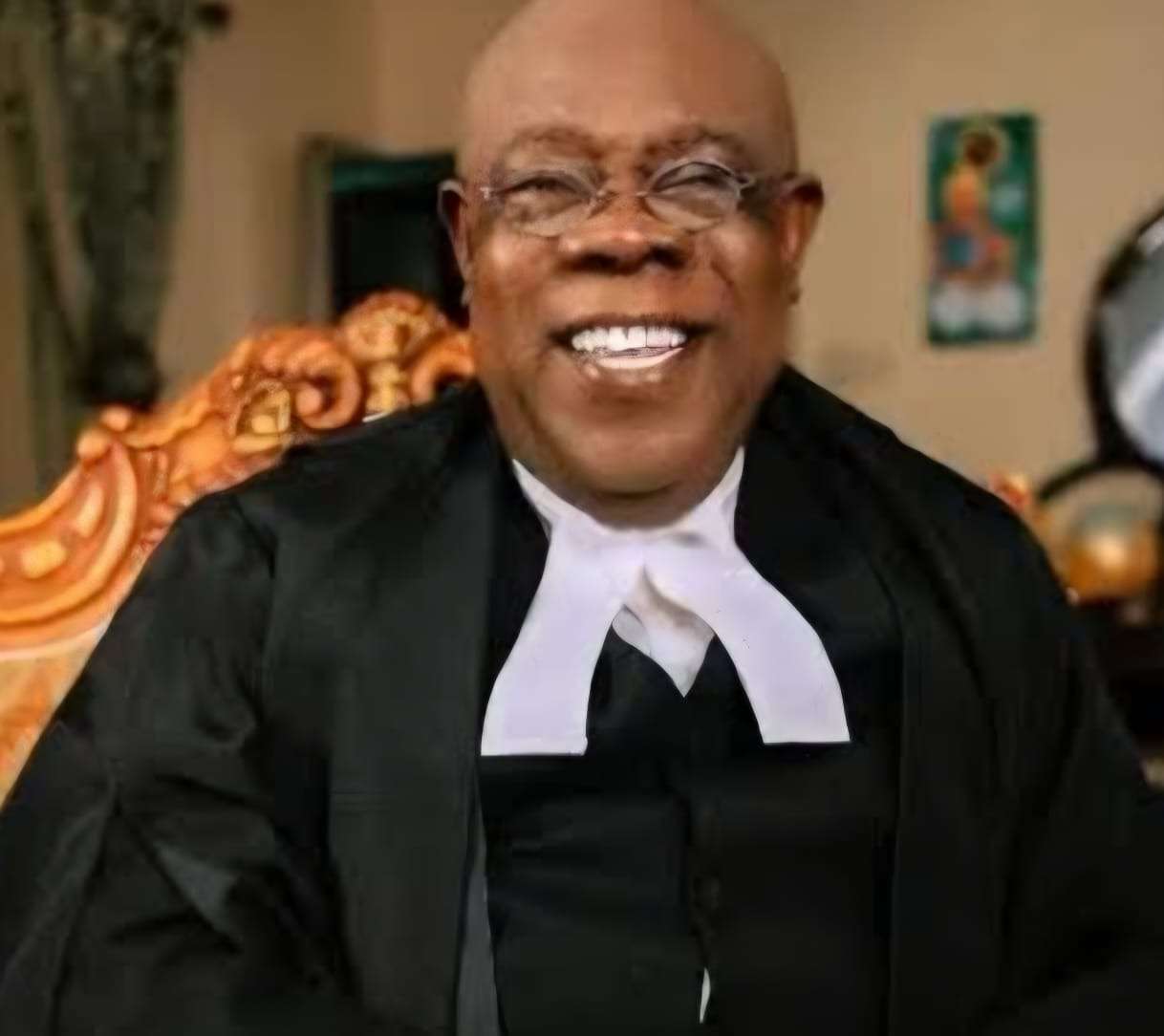
● Asiwaju Kunle Kalejaye, SAN
Eagle 102.5 FM, Ilese-Ijebu