● ADC Presidential Candidate says Presidency’s defence of economic record is “Propaganda for Performance”, cites 63% poverty rate, factory closures, and mortgaged oil revenues
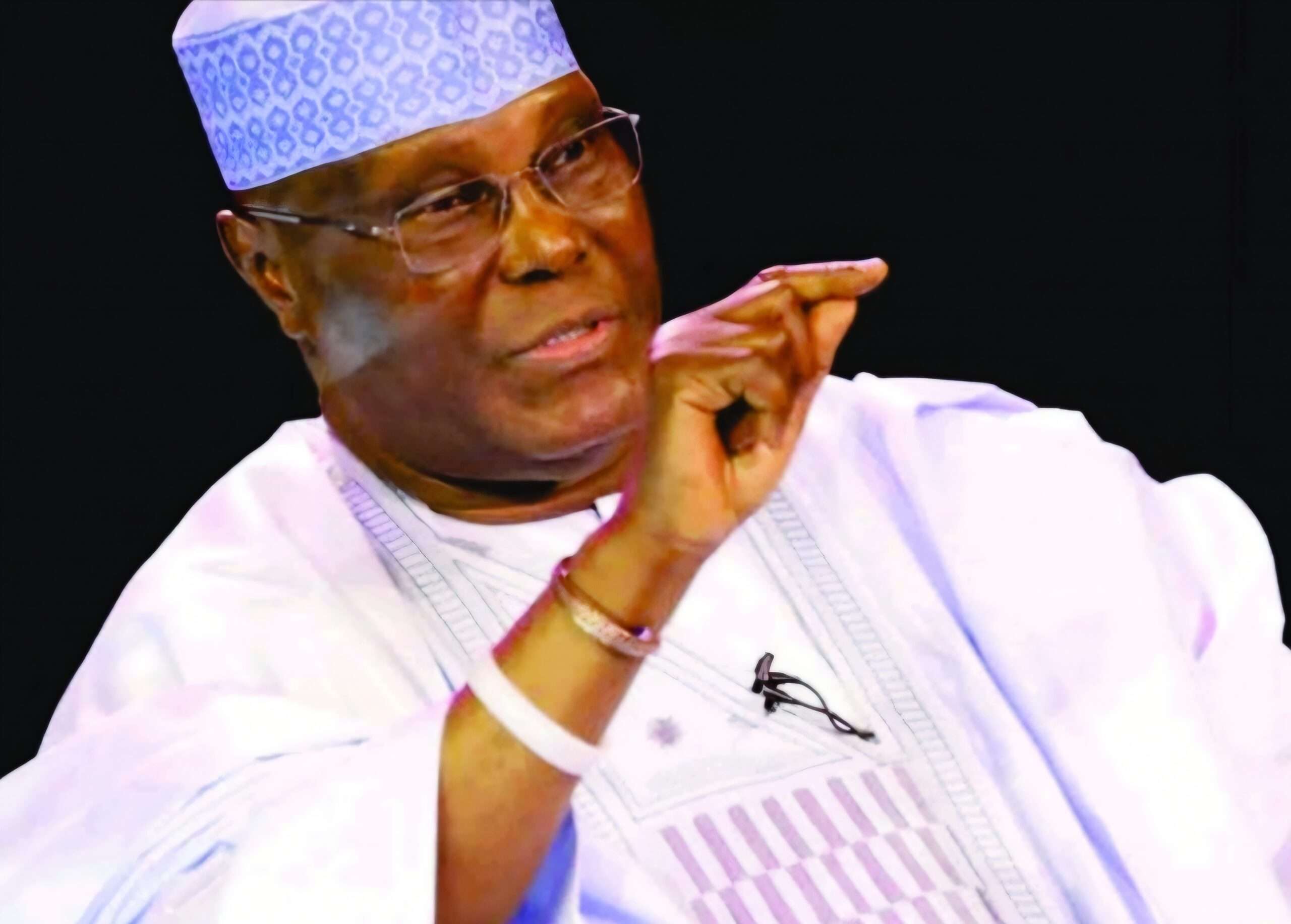
Former Vice President and African Democratic Congress (ADC) Presidential Candidate, Alhaji Atiku Abubakar, has fired back at the State House over its defence of President Bola Tinubu’s economic record, describing it as a “desperate attempt to substitute propaganda for performance.”
In a detailed statement released by his Senior Special Assistant on Public Communication, Phrank Shaibu, Atiku said no amount of statistical manipulation can erase what he called “the daily suffering of millions of Nigerians” under policies implemented since 2024.
The rebuke comes days after the Presidency issued a lengthy response to opposition criticism, touting macroeconomic gains including GDP growth, improved revenue, and debt sustainability.


—“IF THE ECONOMY IS DOING WELL, WHY ARE NIGERIANS GETTING POORER?”—
Atiku said the central question the Presidency failed to answer was about lived reality, not spreadsheets.
“It is remarkable that the Presidency devoted thousands of words to attacking the opposition while failing to answer the one question every Nigerian is asking: If the economy is doing so well, why are Nigerians getting poorer?” he said.
He accused the administration of asking Nigerians to “develop selective amnesia” by dismissing 2024 as irrelevant, even while running the 2024, 2025 and 2026 budgets concurrently.
“As the Yoruba rightly say, the one who defecated yesterday may quickly forget, but the person who cleaned up the mess never does. Nigerians have not forgotten the pain this administration unleashed… Those wounds remain fresh.”
—THE MACRO VS MICRO DIVIDE: “GOVERNMENTS ARE ELECTED TO IMPROVE LIVES, NOT SPREADSHEETS”—
Atiku faulted the government’s celebration of macroeconomic indicators against the backdrop of worsening household conditions.
“The State House celebrates macroeconomic indicators while ordinary Nigerians struggle with microeconomic realities. It speaks glowingly about GDP growth while families skip meals. It boasts of debt ratios while businesses shut their doors.”
Citing the IMF’s latest Article IV Consultation, he noted the Fund acknowledged reform progress but estimated that 63% of Nigerians now live below the national poverty line, with about 27 million facing food insecurity in late 2025.
“Those are not opposition figures. They are the findings of an independent international institution often quoted by the government itself. Governments are not elected to improve spreadsheets. They are elected to improve the lives of their people. Nigerians cannot eat GDP.”
—KEY REBUTTALS: DEBT, SUBSIDY, TAXES, AND OIL REVENUES—
1. On Borrowing and Waste
Atiku said the problem is not borrowing, but what it has produced. Despite record revenues, subsidy removal, and higher tax collection, the government continues to borrow heavily.
“If revenue has improved so dramatically… why does this administration continue to borrow at record levels? That contradiction goes to the heart of this debate.”
2. On Fuel Subsidy Removal
He said Nigerians never opposed reform, but they reject “hardship without accountability.”
“Three years later, where are the dividends? Instead of relief, they have experienced the highest fuel prices in history, unprecedented transport costs, soaring food inflation… Government cannot ask citizens to celebrate sacrifice while the promised rewards remain invisible.”
He also flagged a contradiction: the Presidency claims subsidy is gone, yet attributes missing oil revenues to “obligations arising from subsidy-related financing arrangements.”
3. On Record FAAC Allocations
While acknowledging higher allocations to states and LGs, Atiku asked: “If revenues have reached unprecedented levels, why are Nigerians still confronted with collapsing purchasing power, worsening insecurity, rising unemployment and deepening poverty?”
He dismissed the claim as “true federalism,” saying real federalism means devolving powers, not “devolving pain.”
4. On Tax Reforms
“No tax policy can succeed in an economy where businesses are already struggling to survive… A tax reform that expands government revenue while ordinary citizens become poorer cannot honestly be described as progressive.”
5. On Mortgaged Oil
Atiku described the Presidency’s admission on crude-backed loans as “an indictment.”
“If Nigeria’s future oil earnings have been encumbered… then the administration has merely replaced one fiscal burden with another. Who authorised these transactions? How many barrels have been pledged? Nigerians deserve full disclosure.”
—HEALTH, EDUCATION, INFRASTRUCTURE: “BUILDINGS DO NOT TREAT PATIENTS”—
On health, Atiku said the Federal Ministry of Health told the National Assembly that only ₦36 million had been released under the 2025 budget. With maternal mortality still at 993-1,047 per 100,000 live births, he said “self-congratulation on maternal healthcare is both premature and insensitive.”
On education, he called NELFUND student loans “commendable but not reform,” noting millions of out-of-school children and insecurity in schools.
On infrastructure, he said Nigerians judge “results, not announcements,” pointing to persistent power costs, logistics expenses, and bad roads despite record budgets.
—INFLATION, SOCIAL PROGRAMMES, AND THE MANUFACTURING CRISIS—
Atiku drew a line between lower inflation and lower prices: “A reduction in the rate of inflation simply means prices are rising more slowly. It does not mean they have returned to affordable levels.”
He demanded transparency on NG-CARES, HOPE, and cash transfer programmes, saying “outcomes, not announcements” matter.
His harshest verdict was on industry. Citing the Manufacturers Association of Nigeria (MAN), he said 767 companies have shut down, 335 are distressed, and ₦2.14 trillion in goods remain unsold due to collapsed purchasing power. He also noted exits by P&G, GSK, Sanofi, and local firms like Jubilee Syringe, plus ₦1.11 trillion spent on diesel by manufacturers.
“Factories do not shut down because the opposition writes press statements… They leave because the economic environment has become increasingly hostile to production.”
—“STOP BLAMING 2007”—
Atiku rejected attempts to blame the Obasanjo administration, which left office 19 years ago. He recalled that administration’s $18 billion Paris Club debt relief, banking consolidation, telecoms liberalisation, and Excess Crude Account.
“Leadership is about accepting responsibility, not recycling excuses. If, after more than three years in office, this administration is still looking backwards for explanations instead of forward for solutions, then it has already admitted the poverty of its own record.”
—FINAL WORD—
“The true report card of this administration is not written in the corridors of Aso Rock. It is written every day in the markets, on the farms, in the factories, in hospitals, in classrooms and in millions of Nigerian homes. That report card is being written by the Nigerian people themselves. And its verdict is becoming clearer with each passing day.”