We have all watched Nigeria decay. Not slowly, as a glacier retreats, but rapidly, as a building collapses after its foundation has been eaten by termites. And the termites, dear compatriots, are the very men who swore oaths to protect the structure. The 2027 election cycle has commenced. The money bags are already assembling. The godfathers are already distributing their anointed candidates. And the Nigerian people? They are being asked, once again, to play their assigned role: just show up on election day, queue, thumbprint, return home, having exchanged their sovereignty for a bag of rice or the promise of a job that will never materialise, or whatever else, all trivial. It’s not the time to be silent.
The arithmetic of exclusion is already in play. As elucidated by S. O. K. Shillings Esq. in his recent treatise, since 1999, Lagos State has had four governors. Their origins tell a story that the political establishment would prefer you not read. Namely, Bola Ahmed Tinubu (1999–2007), originally from Osun State; Babatunde Raji Fashola (2007–2015), from Lagos State; Akinwunmi Ambode (2015–2019), from Ondo State, and Babajide Sanwo-Olu (2019–2027), from Ogun State. So, in twenty-eight years, Lagos State has been governed by its own son for only eight of them. The other twenty years have been a rotation among men whose ancestral roots lie in Osun, Ondo, and Ogun. And now, as 2027 approaches, the political machinery is grinding again, and the names being circulated are Dr Obafemi Hamzat (Ogun State, by ancestry) and Akinwunmi Ambode (Ondo State). The Lagos East Senatorial District, which includes Ikorodu Division, has held the governorship for exactly one term of four years through Ambode. Ikorodu Division itself, one of the five historic divisions of Lagos State, has never produced a democratically elected governor. Neither has Badagry Division. The five divisions of Lagos — Ikorodu, Badagry, Ikeja, Lagos Island, and Epe — constitute the ancestral homeland of the Awori, the Ogu, and the Ijebu peoples. These are not abstract administrative units. They are the soil from which Lagos sprang. And yet, as the group De Renaissance Patriots Foundation observed, “since the return to democratic governance in 1999, Lagos State has increasingly been treated as a political orphan, with indigenous participation in governance steadily diminishing”.
The group’s statement deserves to be quoted at length: “With few exceptions, there is a growing perception that indigenous representation at the highest levels has been limited. Across key arms of government, many positions are occupied by non-indigenes, raising concerns about equity, inclusion, and justice for Lagos indigenes. This situation has led to the marginalisation of those whose ancestral roots define Lagos State. It is troubling that individuals without clear indigenous roots have occupied significant public offices for extended periods. This raises a fundamental question: Are there no competent and qualified indigenes of Lagos State to serve?” The question answers itself.
Of course, there are competent indigenes, but competence is not the currency of Nigerian politics. Loyalty is. And loyalty is measured not by service to the people, but by service to the godfather.

Let’s explore the architecture of godfatherism. The political scientist Richard Joseph, in his seminal work Democracy and Prebendal Politics in Nigeria (1987), described a system in which public office is treated as a resource to be distributed among competing elites. Nearly four decades later, that description remains not merely accurate but prophetic. The legal framework for candidate selection exists. Section 84 of the Electoral Act 2022 provides for direct primaries, indirect primaries, and consensus candidacy, but only where consensus is “voluntary”. In practice, as analyst Samuel Orovwuje recently wrote, “what is presented as unity is often managed compliance; what is described as agreement is frequently pre-arranged”. In Lagos State, the Governor’s Advisory Council (GAC) remains “the place where political direction settles into reality”. Aspirants who insist on open primaries are “edged out long before any vote is cast”. The party machinery, financed by godfathers, simply transfers its allegiance to the chosen heir. The delegates, accustomed to receiving benevolence, see no reason to disobey. And the electorate, weary and beaten, watches as the same names appear, year after year, generation after generation. The pattern is not unique to Lagos.
In Ogun State, factional struggles have produced parallel primaries. In Oyo State, both the APC and the PDP alternate between direct primaries and consensus arrangements depending on political advantage rather than democratic principle. In Abia State, disputes over zoning, legitimacy, and inclusion continue to destabilise party cohesion. As Orovwuje warns, “when dominant parties begin to operate through similar mechanisms which restrict competition, centralise decisions, and recycle elite networks, the distinction between them narrows”. This is how a de facto one-party reality emerges, not through law, but through convergence in political practice.
The need to consider candidates based on their credentials is downplayed for other sinister considerations. Consider the two names currently being “ground-tested” in Lagos: Dr Obafemi Hamzat and Akinwunmi Ambode. Dr Hamzat has been in government in Lagos for approximately twenty-five years: under Fashola as Special Adviser, under Ambode as Commissioner, under Sanwo-Olu as Deputy Governor. Some may want to explain that as progression, but in a democracy, that is usurpation by the power of a godfather, unless, of course, there is consensus. His late father was Oba Mufutau Hamzat, a traditional ruler in Afowowa-Sogade, Ogun State, where the family retains its chieftaincy and where Dr Hamzat’s brother currently serves as Commissioner for Local Government Affairs. By the reckoning of the indigenous groups, Dr Hamzat is a son of Ogun State who has been a beneficiary of Lagos resources for half a century while maintaining his loyalty to his state of origin. On this basis, their ground for agitation is solid. Akinwunmi Ambode served one term as governor (2015–2019). He was rejected by the Governor’s Advisory Council for a second term, the same council that had elevated him, and Sanwo-Olu was brought forward as the alternative.
Now, the same machinery that discarded him may be considering bringing him back. His father is believed to have hailed from Ilaje Ese Odo in present-day Ondo State. The Lagos State Prominent Indigenes group has issued conditions for any governorship aspirant: they must be “a bona fide indigene of Lagos State, with verifiable ancestral roots”; they must have “no history of corruption or criminal infractions”; they must be “independent-minded, yet collaborative”. These are not unreasonable demands. They are the bare minimum of democratic accountability. And yet, the political machinery appears poised to ignore them entirely. The opposition parties have an opportunity here. As S. O. K. Shillings Esq. wrote, “Find credible indigenes of Lagos State, especially from Ikorodu and Badagry Division, as gubernatorial candidates and help us do a census of those who remember their roots and those of the DNA of Esau.” But the opposition parties are themselves captured by the same godfather networks. The PDP in Lagos is not a credible alternative; it is a subsidiary of the same political economy, waiting for its turn at the trough.
The Lagos story is not an isolated pathology. It is a template being replicated across the South-West, and the citizens are watching their own democratic spaces shrink under the same godfather architecture. In Oyo State, for example, the “All Progressives Congress” has adopted a consensus model for selecting its 2027 governorship candidate, but what is being advanced as “consensus” is widely perceived as imposition by the unseen hand of the godfather, drawing immense reservation, rejection, and resistance by other candidates and their supporters. Some stakeholders have openly rebelled, warning that “imposition in any form without the consensus arrangement by the leaders and stakeholders may spell doom”.
They cite the party’s recent electoral history: how several imposed candidates were defeated by the PDP in 2019 and 2023. Despite these clear warnings, the party leadership appears determined to proceed with a consensus arrangement that may not augur well for the party in the state. The cry from the grassroots (the majority) remains: “The party should adhere to the principles of constitutional democracy by conducting direct primaries in which all members shall participate. This is the only way the party can avert bitterness and acrimony”.
In Ogun State, the dysfunction takes an even more theatrical form. The political elite have reportedly “closed ranks” behind Senator Olamilekan Adeola, popularly known as Yayi, as the consensus governorship candidate for 2027. Yet this unanimity masks a deeply fractured political landscape. The rivalry between Governor Dapo Abiodun and Senator Gbenga Daniel has spilt into public view, with the state government issuing demolition notices on Daniel’s properties in what his camp calls “a political witch-hunt” and “an abuse of power”. Daniel has obtained a court injunction restraining the demolition, but the message is clear: the state’s political machinery will be weaponised against those who refuse to fall in line. The battle for the Ogun East senatorial seat, which Abiodun is widely believed to be eyeing for 2027, has already deepened factionalism within the APC. Meanwhile, groups like the Ogun West Initiative argue that the governorship should finally shift to Ogun West, a zone that has never produced a governor since the state’s creation in 1976, and frame 2027 as “a matter of justice”. The godfathers, however, have other plans, and the people’s justice is once again being deferred. The political scenarios go on and on across the geopolitical zone, albeit, the whole of Nigeria.
The Independent National Electoral Commission has a role to play in this crisis. Under the Electoral Act 2022, INEC has the authority to monitor party primaries and to reject candidates who emerge through processes that violate the law. But INEC has historically been reluctant to exercise this authority, preferring to defer to party “autonomy” even when that autonomy is clearly being abused. This must change. INEC must be empowered and must empower itself to investigate the emergence of candidates. If a candidate emerges through a consensus process that was not genuinely voluntary, INEC should reject the nomination. If a candidate has a criminal record or is under investigation for corruption, INEC should disqualify them. If a candidate’s emergence is so blatantly a product of godfather manipulation that no reasonable person could call it democratic, INEC should step in. The National Assembly also has a role. The Electoral Act should be amended to require direct primaries for all parties, eliminating the backroom deals that consensus arrangements enable. These are not radical proposals. They are the minimum standards of any functioning democracy. The fact that they seem radical in Nigeria is a measure of how far we have fallen.
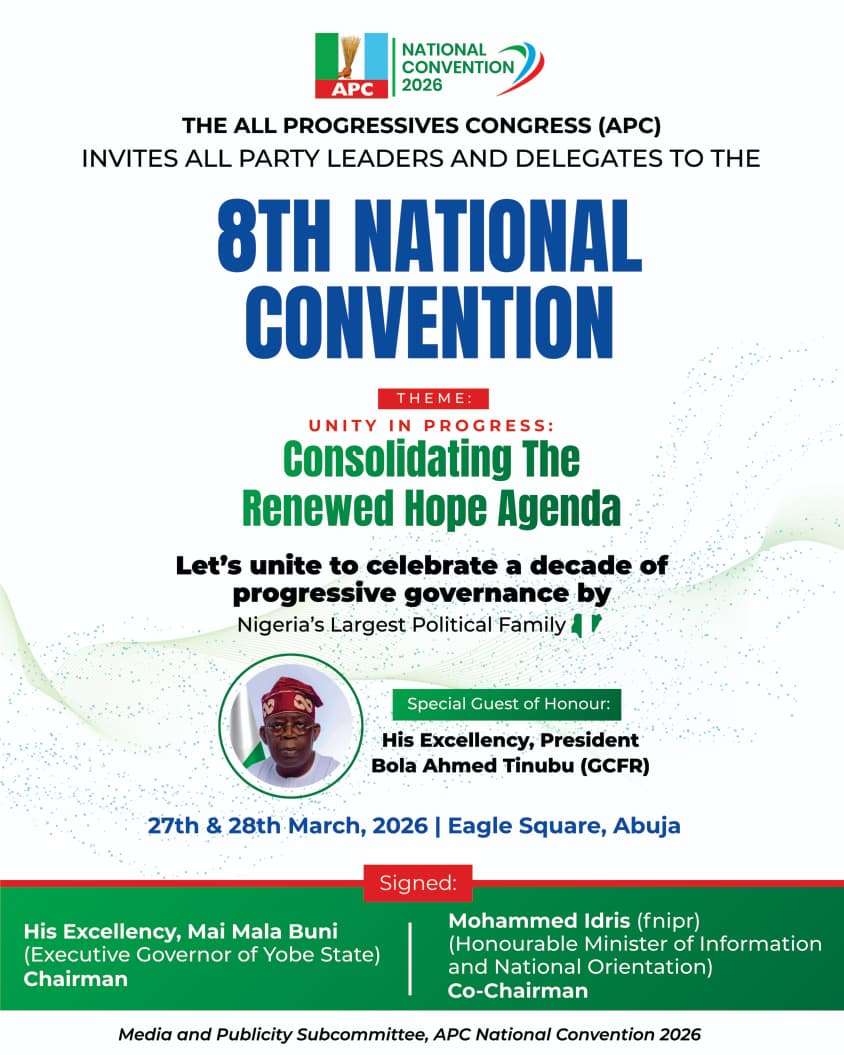
At this juncture, therefore, I wish to address myself to a personality I respected so much since the days of NADECO, and who represented for the majority of clamouring youth of those days, an icon of democratic ideals, so beloved, and so respected. That man was “Uncle Bola Ahmed Tinubu”, who today is the President of the Federal Republic of Nigeria. Mr President, sir, you have been the dominant figure in Lagos politics since 1999. You built the structure. You mentored the successors. You have every right to take pride in the state’s growth and in the political machine you constructed. But sir, you also bear a responsibility.
The machine you built has become an instrument of exclusion. The “Lagos Family” you speak of has become a closed corporation, rewarding loyalty over competence, connections over character, and continuity over justice. You are now the President of Nigeria, not merely the godfather of Lagos. Your legacy will not be measured by how many of your loyalists occupy offices, but by whether you left the nation better than you found it. A nation where the best candidates are systematically excluded from consideration is not a nation moving forward. It is a nation being hollowed out. The Renewed Hope Agenda cannot be realised if the primary mechanism for selecting leaders remains a backroom deal among a few unbalanced party elders. The people’s hope cannot be renewed if every election cycle brings the same recycled names, the same godfather-controlled tickets, the same sense that their votes do not matter.
You yourself emerged by the grace of God and the democratic principles of party internal democracy, otherwise your stronger adversaries then would have succeeded in stifling you out! Why would you now today, side with risky, unpopular, and un-consensus “consensus” and exclude due diligence, competency, equity, fairness, and justice to people with clear and distinct preferences in a democratic setting you superintend over? Sir, you have the power to change this. Not tomorrow. Not after the primaries have been rigged and the candidates imposed. Now. You influence to demand that the APC Southwest States of Lagos, Ogun, Oyo, Osun, Ondo, and Ekiti conduct open and transparent primaries. You have the authority to insist that better and more preferred, godfatherless but qualified indigenes from underrepresented geographies of each state be given a fair chance. You have the moral platform to declare that the era of godfatherism must end at least in the ruling party in your very own native and first-level geopolitical space, as a matter of legacy, for which many of us used to know you for. Posterity is watching. The future of our young children is at stake. The people are tired of stage-managed succession. It is not productive in the long run. If it worked against you in 2023, you would be idling, frustrated in Ikoyi today, along with millions of your supporters, including the writer, and we would have been frustrated! Think on that, Mr President! If you order APC to adhere to internal democratic principles today, compliance will be enthusiastic, because this is the wish of the majority.
Next, ensure that INEC is empowered to do its job without interference. Former Minister Rotimi Amaechi has publicly challenged you to “steer clear of the judiciary and INEC” ahead of 2027, warning that the use of federal institutions to disrupt rival political platforms will undermine the credibility of the electoral process. SERAP has similarly urged you to reconsider the appointment of alleged APC members as Resident Electoral Commissioners, warning that “conducting the 2027 general elections under the shadow of partisan appointments will mock Nigerians’ right to free and fair elections”. These are not opposition talking points; they are legitimate concerns from civil society and political actors across the spectrum. You must instruct the National Security Adviser and all federal agencies to leave INEC and the judiciary alone. I trust you can do that, as a true democrat that you are, for the sake of Nigeria! Finally, demonstrate that the Renewed Hope Agenda applies to internal party democracy as well. A nation cannot be governed justly if the parties that produce its leaders are themselves unjust. The APC must become a model of internal democracy, not a monument to godfatherism. Sir, you are an astute politician. You understand power better than most. But astuteness without conscience is cunning, and cunning leaves no legacy worth remembering. The children of the underrepresented regions in the various states are watching. They are waiting to see if the man who once fought for democracy will now preside over its slow strangulation. Do not let the machine you built become the monument to a promise betrayed. Do not let the godfather in you silence the democrat that history remembers.
Fellow Nigerians, you are the ones who will queue on election days, the ones who will be asked to choose between two candidates, both of whom were selected in a room you will never enter, by men you will never meet, using money you will never see. Do not accept this. The ballot is your weapon. But the ballot is only as powerful as the will behind it. If you continue to vote for the candidates the godfathers present, you are not a citizen exercising sovereignty. You are a subject consenting to your own subjugation. Demand more. Before you vote, ask: how was this candidate selected? Who paid for their nomination? What is their ancestral origin? What is their record of service? If the answers are unsatisfactory, refuse to vote for them, even if it means spoiling your ballot. A spoiled ballot is a protest. A vote for a godfather’s anointed candidate is an endorsement. Join or support organisations that are fighting for electoral reform; they are not enemies of progress. They are citizens exercising their right to demand accountability. Amplify their voices. Attend their meetings. Sign their petitions. And if you have the courage, and the resources, and the calling, run for office yourself. Do not wait for the godfathers to invite you. They will not. Build your own structure. Mobilise your own community. Refuse to kneel. Nigeria will become better because of it. The 2027 elections are not a foregone conclusion. They are a battlefield. The godfathers have their money, their thugs, their backroom deals. But we have the numbers. And in a democracy, numbers are the only weapon that matters. The question is whether we will use them. Arise, O compatriots.
TheConscienceChronicler.042026
Stay ahead with the latest updates! Join The ConclaveNG on WhatsApp and Telegram for real-time news alerts, breaking stories, and exclusive content delivered straight to your phone. Don’t miss a headline — subscribe now!