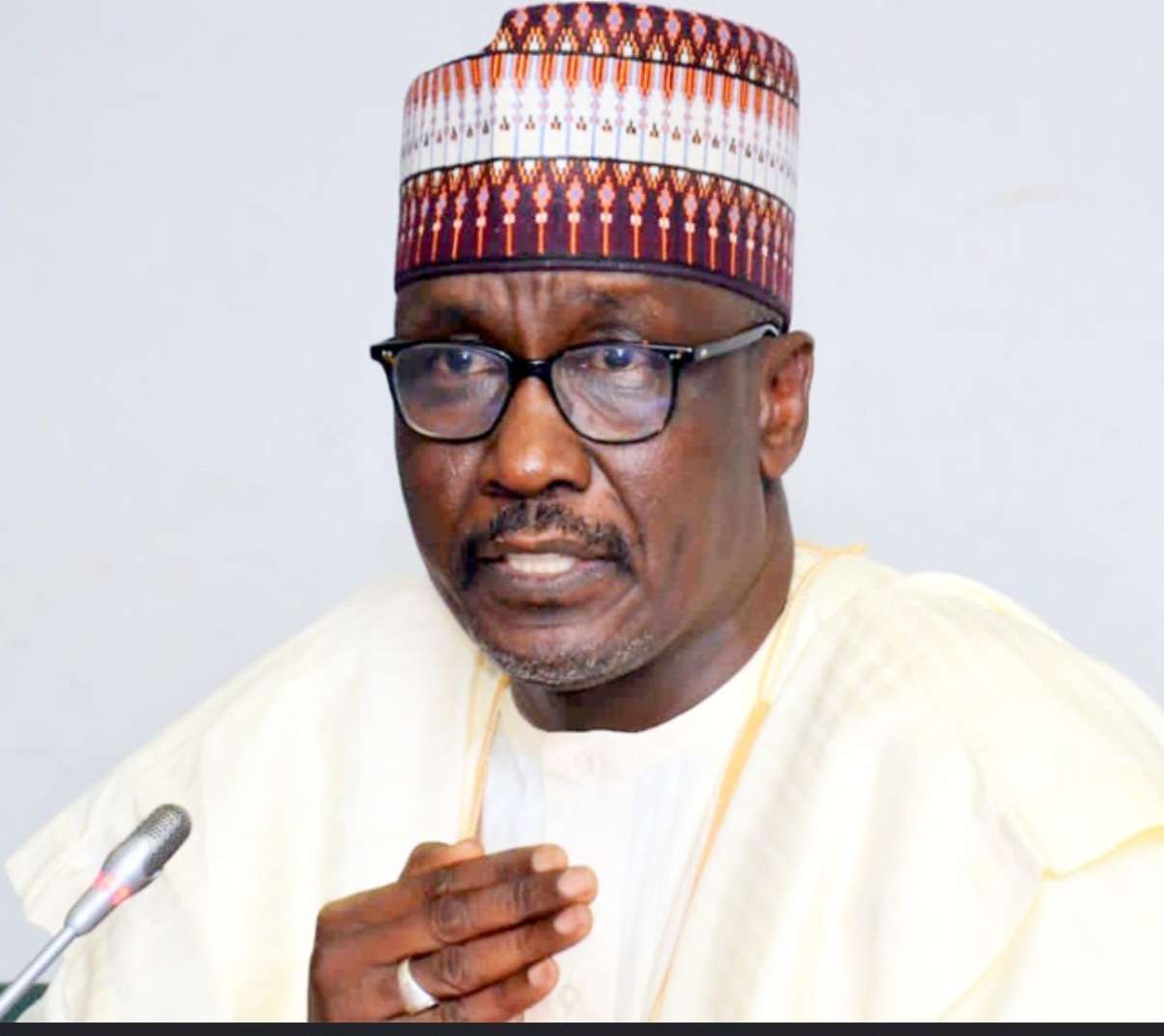
In every nation, there comes a moment when the line between accountability and persecution becomes blurred. It is a delicate intersection where public interest, politics, institutional oversight, personal reputation, and human compassion collide. The unfolding drama surrounding the immediate past Group Chief Executive Officer of the Nigerian National Petroleum Company Limited (NNPCL), Mele Kyari, appears to have reached such a point.
For months, the Senate Committee on Public Accounts has intensified its scrutiny of NNPCL’s audited accounts spanning 2017 to 2023. At the center of the storm is an audit query involving over N210 trillion, comprising expenditures recorded as Joint Venture cash calls and sundry receivables. The committee insists that the figures must be adequately explained, while former officials of the national oil company have been summoned to provide clarification.
Ordinarily, legislative oversight is a constitutional responsibility that should be encouraged in every democracy. Public institutions handling national resources must remain accountable to the people. However, beyond the figures and technical audit questions lies a larger issue that deserves equal attention: the treatment of a man who dedicated more than three decades of his life to Nigeria’s oil and gas industry.
Mele Kyari’s journey in the petroleum sector spans approximately thirty-five years of continuous service. Rising through the ranks of the former Nigerian National Petroleum Corporation, he eventually assumed leadership of the organization at one of the most turbulent periods in the history of the global energy industry.





His tenure coincided with unprecedented challenges. The COVID-19 pandemic brought global oil markets to their knees. Crude oil prices crashed dramatically. Energy transition campaigns intensified across the world. Investors became increasingly cautious about fossil fuel projects. Nigeria’s oil production suffered from rampant crude theft, pipeline vandalism, and declining investment.
Yet amid these daunting circumstances, Kyari embarked on an ambitious mission to reposition Nigeria’s national oil company. He championed the commercialization of NNPC and subsequently oversaw its transition into NNPCL under the Petroleum Industry Act. For the first time in decades, the company began publicly declaring profits, a development that supporters cite as evidence of improved corporate governance and financial discipline.
Under his stewardship, efforts were made to revive domestic refining capacity. The rehabilitation of government-owned refineries gained renewed momentum. New partnerships were pursued. Transparency initiatives were introduced. The company sought to transform itself from a government-dependent bureaucracy into a commercially driven enterprise capable of competing with global energy corporations.
Whether one agrees with every policy decision he made or not, it would be difficult to deny that Kyari inherited enormous structural problems and confronted some of the most challenging realities in the petroleum sector.
This is precisely why the current developments have generated mixed reactions across the country.
One fundamental question continues to resonate among observers: Why does the public discourse appear to have shifted from seeking explanations to seemingly pursuing punishment before conclusions have been reached?
The N210 trillion figure being discussed remains an audit query, not a judicial finding of fraud. An audit observation is fundamentally a request for clarification, reconciliation, and explanation. It does not automatically amount to criminal conduct. Until all relevant documents are examined and all parties heard, caution should guide public commentary.
Equally troubling are reports suggesting that Kyari is presently receiving medical treatment in Germany. If indeed his health condition requires specialized care, then a balance must be struck between accountability and humanity.
A society that values justice must also value compassion.
No public official should be shielded from scrutiny. At the same time, no citizen—regardless of position—should be denied reasonable consideration for legitimate health challenges. The principles of due process demand not only that individuals answer questions when required, but also that institutions act fairly and proportionately.
If Kyari has repeatedly communicated his willingness to appear before the committee once medically fit, should such assurances not receive reasonable consideration? Is a physically compromised individual in the best condition to participate effectively in proceedings involving complex financial and technical matters?
These questions deserve answers.
The political undertones surrounding the controversy have further deepened public curiosity.
Particularly intriguing has been the visible disagreement among senators regarding the former NNPCL boss. Reports from committee proceedings indicate that while some lawmakers have advocated stronger measures, others have urged caution and patience, especially in light of information concerning Kyari’s health.
The exchanges have become even more noticeable because some of the most vocal interventions—both for and against Kyari—have reportedly come from senators of the South-East extraction.
This development has naturally generated speculation across political circles. Why have opinions become so sharply divided? Is this merely a reflection of differing views on legislative oversight? Is it an expression of broader political rivalries? Or is it simply the normal contest of perspectives that accompanies every major national issue?
At this stage, only the individuals involved can provide definitive answers.
What remains clear, however, is that the debate should not descend into ethnic, regional, or political suspicion. The focus must remain on facts, evidence, and due process.
Another question that continues to linger is whether the nation is sufficiently appreciating the service record of those who have spent decades in public institutions.
History shows that many public officials are celebrated while in office but quickly become targets once they leave. This pattern often creates a dangerous disincentive for future leaders. If every former public servant comes to view retirement as the beginning of endless political battles, institutional continuity may ultimately suffer.
This does not mean former officials should enjoy immunity from scrutiny. Far from it. Accountability remains indispensable to good governance. However, accountability must never be transformed into a spectacle. It must be driven by facts rather than emotions, evidence rather than assumptions, and justice rather than public pressure.
The Senate Committee on Public Accounts has every right to demand explanations regarding the figures under review. Nigerians equally deserve transparency concerning the management of public resources. But the process must remain measured, professional, and respectful of the rights and dignity of all parties involved.
For now, the most reasonable path forward is simple.
Let Mele Kyari recover sufficiently to appear and provide explanations regarding the audit queries. Let the committee conduct its investigation thoroughly and impartially. Let documents speak louder than political rhetoric. Let facts prevail over conjecture.
Only then can Nigerians determine whether this episode is a genuine exercise in legislative accountability or an unfortunate case of a public servant being subjected to excessive pressure after decades of service.
Until that moment arrives, one question will continue to echo across the nation:
Are we witnessing oversight in action, or are we watching a distinguished public servant become the latest casualty of Nigeria’s unforgiving political culture?
The answer, ultimately, lies not in accusations or headlines, but in the integrity of the process itself.