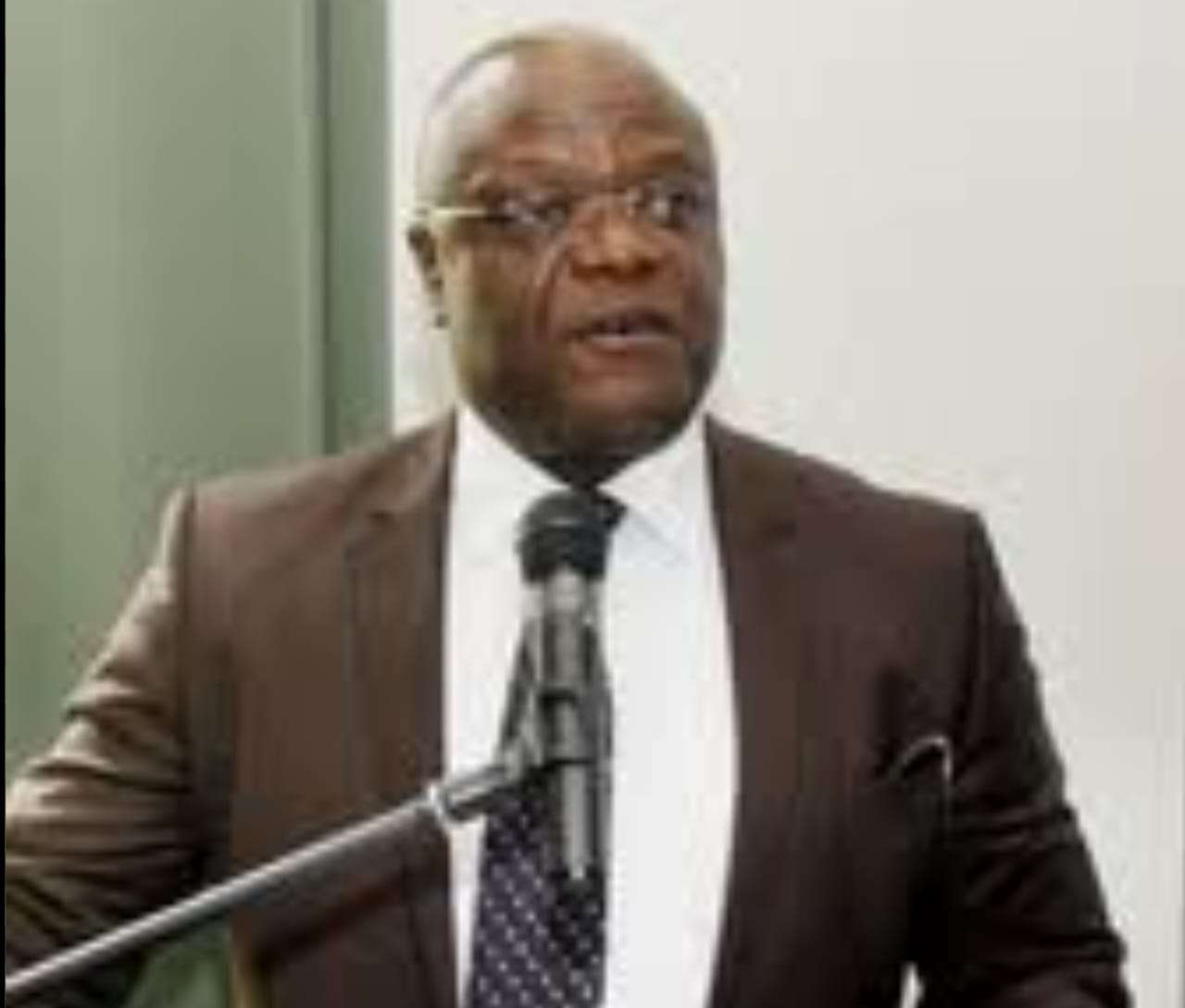
The Nigerian media must urgently reinvent itself to survive the new era of misinformation, artificial intelligence, and public distrust, Professor Abiodun Adeniyi of Baze University declared on Thursday at the 2025 Nigerian Guild of Editors (NGE) Forum in Abuja.
Delivering a keynote address entitled “The Evolving Face of Journalism: Battling Misinformation, AI Disruption, and the Credibility Gap,” Adeniyi said journalism stands at a historic turning point, one where technology and politics are reshaping truth, public reasoning, and national cohesion.
Addressing the audience of senior editors, media executives and academics, he described the NGE not merely as a professional body but as “the moral compass of our democracy, the steward of public reason, and the guardian of truth amid distortion.”
The forum, themed “Democratic Governance and National Cohesion: The Role of Editors,” focused heavily on electoral integrity, institutional credibility, and the alarming rise of digital misinformation.




Adeniyi traced the collapse of traditional news gatekeeping to the proliferation of smartphones, social media, and user-generated content, which have turned every individual into a potential publisher.
“Social media has democratised publication but also deregulated truth,” he warned. “We now live in an era where misinformation spreads faster than facts, and emotion outweighs evidence.”
Quoting the World Health Organisation’s characterisation of the COVID-19 misinformation wave as an “infodemic,” he said editors now serve not simply as gatekeepers but as navigators of meaning, tasked with curating, contextualising, and correcting falsehoods in real time.
He noted that the digital information glut has created an unprecedented editorial burden in which “journalism must be fast and faithful, digital yet disciplined, plural yet principled.”
To show that misinformation predated social media, Adeniyi offered a sweeping historical overview, from Octavian’s smear campaign against Mark Antony in 32 BCE, to Revere’s exaggerated 1770 Boston Massacre engraving, to the industrialised propaganda of World Wars I and II.
“The platforms have changed, but the logic endures,” he said, citing the weaponisation of falsehoods in the Iraq War and the COVID-19 pandemic. “What has changed is velocity, volume, and visibility,” he stressed.
Je said: “A falsehood now circles the world before a correction wakes up.”
He invoked Walter Lippmann’s timeless warning: democracy cannot function without access to reliable facts.
Turning to Nigeria, Adeniyi described the 2023 general elections as a turning point in the nation’s information disorder.
“Deepfakes, AI-generated voices, and algorithmically amplified falsehoods blurred the line between political persuasion and digital manipulation,” he said, citing Reuters Institute findings that false content was more widely circulated than verified information.
He characterised editors as “the last line of defence in an epistemic war, fought not with bullets but with bytes, not with bombs but with bots.”
Adeniyi illustrated the irreplaceable value of editorial experience with a personal anecdote from his years as a Guardian reporter.
He recalled excitedly filing a major scoop during military rule, only for his editor, Eluem Emeka Izeze, to spike the story after discerning its potential consequences.
“What an elder can see while sitting, a young person will not see standing,” Izeze told him.
Days later, another newspaper ran the story and suffered damaging repercussions.
The experience, Adeniyi said, deepened his appreciation of editorial wisdom.
“Those cannot be our sources,” he said, criticising society’s growing habit of citing vague online rumours as news. “At best, they are only cues or clues.”
The guest speaker described artificial intelligence as “the new electricity”, transforming industries, including journalism.
But he warned against overestimating AI’s capabilities.
Read him: “AI is not a replacement for knowledge generation. It is an assistant to expertise.” He said “Machines may analyse, but humans must interpret.”
He argued that AI must be governed and “domesticated,” not feared, with clear ethical oversight. If not properly regulated, AI systems will magnify bias, triviality, or shallow content.
“The danger lies not in AI itself but in its misuse, and in our misunderstanding,” he said.
Citing the Edelman Trust Barometer (2025), Adeniyi said global trust in journalism has dropped to 42%, while in Nigeria, the Reuters Institute reports that only 38% trust “most news, most of the time.”
“The trust deficit arises from sensationalism, partisanship, and the commercialisation of news,” he warned.
According to him, “Clickbait has replaced curiosity; speed has trumped scrutiny.”
Adeniyi highlighted global examples of responsible innovation, including Associated Press’ use of AI for data-heavy reports but applying strict human oversight; BBC has developed an AI Ethics Charter to govern tech use in newsrooms; and The Guardian UK promotion of “slow journalism”, focusing on accuracy over speed.
He urged Nigerian media houses to develop a National AI and Ethics Charter, strengthen fact-checking coalitions, and modernise journalism curricula.
He noted that Baze University has already adopted an AI governance policy and encouraged others to do the same.
Adeniyi called on editors to conceive of their work not merely as content production but as nation-building. “You are the custodians of reason in a time of noise, the curators of meaning in an era of manipulation, and the last moral checkpoint before information becomes action,” he told attendees.
He argued that democratic governance, national cohesion, and institutional accountability all depend on credible journalism.
Quoting Hannah Arendt, he said: “The moment we stop telling factual truths, we lose the ground on which politics stands.”
In a stirring conclusion, Adeniyi reflected on his journey from the newsroom to academia and urged editors to reclaim journalism’s original moral courage. “If democracy is to endure,” he said, “it must rediscover its faith in credible, courageous editors, the sentinels of our collective reason.”