The Federal Government has announced plans to discontinue the policy that separated Junior Secondary Schools from Senior Secondary Schools, citing its failure and contribution to Nigeria’s over 20 million out-of-school children.
—“Disarticulation Policy Has Failed”—
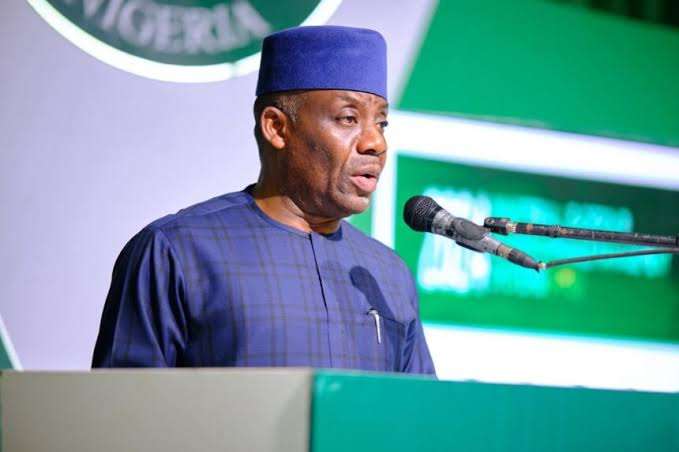
Minister of Education, Dr Tunji Alausa, disclosed this on Tuesday in Abuja during the inauguration of the UBEC Ministerial Implementation and Monitoring Committee.
He said the “disarticulation policy,” which mandated separate physical and administrative structures for JSS and SSS, has created severe imbalances. According to him, junior secondary facilities are overcrowded while senior secondary schools remain largely underutilised in several states.





“Data from Kaduna and other northern states show overflowing JSS classrooms and empty senior secondary schools because you have one principal for JSS and another for SSS,” Alausa stated.
The Minister faulted the structure for prioritising administrative posts over student access.
“We have 20 million dropouts from primary school to JSS. We have about 80,000 public primary schools, but only about 15,000 junior secondary schools. That ratio is one to eight,” he said.
“This disarticulation policy has contributed to this. We can’t be creating positions because we want a director level for people while we harm our education system. It’s not right. It’s about doing what is good for every Nigerian child.”
Alausa declared the policy a failure and confirmed that government will begin a phased withdrawal.
“I can objectively report today that this disarticulation policy has failed. We will phase it out,” he said.
The proposal to abolish it will be presented at the next meeting of the National Council on Education.
—UBEC to Fast-Track Smart, Bilingual and Alternative Schools—
The Minister also inaugurated a high-powered committee chaired by Prof. Rashid Aderinoye to ensure the completion, handover and operationalisation of hundreds of UBEC-funded Smart Schools, Bilingual Schools and Alternative Schools across the country.
He expressed concern that many projects remain unfinished, while several completed schools have not been handed over to states or integrated into their systems.
“It is a waste of public resources and a denial of learning opportunities for thousands of children,” Alausa said.
UBEC Executive Secretary, Aisha Garba, said the Commission has made progress in expanding access.
She disclosed that 37 Smart Schools have been established nationwide, with 24 already conducting academic activities. The rest are at various stages of completion and furnishing.
Under the UBEC–Islamic Development Bank Bilingual Education Programme, 30 schools have been established in nine states.
Three boarding schools have been completed and commissioned, while four others are awaiting commissioning.
Garba added that the Alternative Schools Programme is also increasing access for out-of-school children through flexible and inclusive learning models.
She said the new Ministerial Implementation and Monitoring Team will track project delivery, resolve bottlenecks, and ensure investments translate into functional schools.
—Committee Pledges Results-Driven Oversight—
Speaking for the committee, Prof. Aderinoye assured that members would work with diligence, transparency and a focus on outcomes.
“We will monitor implementation across the country, address delays, and ensure these investments improve access to quality education for Nigerian children,” he pledged.