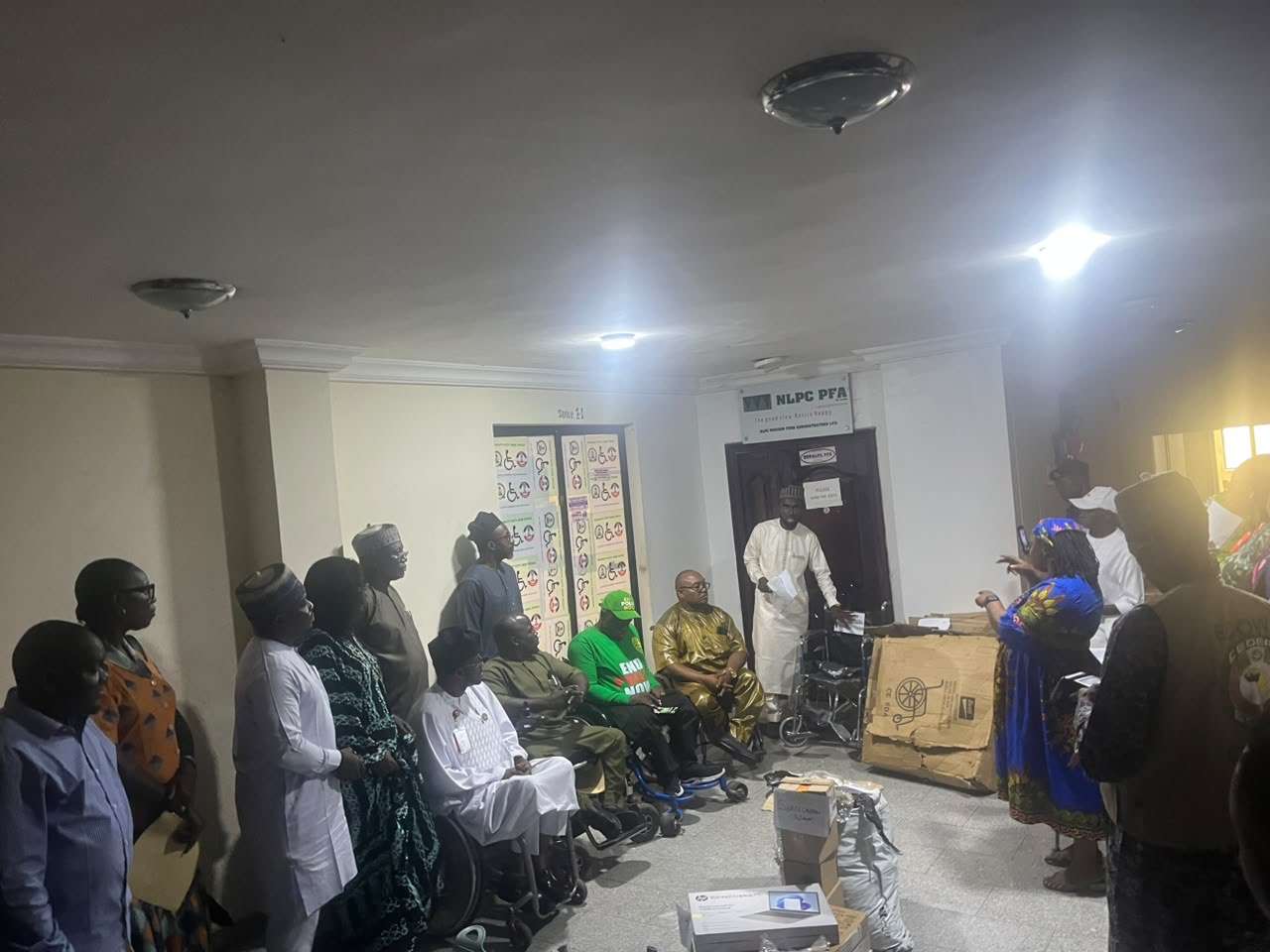
The Economic Community of West African States, ECOWAS, has handed over assistive devices to children with disabilities in Nigeria as part of a new regional programme to expand access to assistive technology and strengthen disability support systems across West Africa.
The intervention, implemented under the ECOWAS Regional Programme for the Provision of Assistive Devices to Children with Disabilities, marks Nigeria’s participation in Phase 1 of the initiative alongside Togo, following nearly two years of planning.
‘There is ability in disability’
Speaking at the handover ceremony in Abuja, the Executive Secretary of the National Commission for Persons with Disabilities, NCPWD, Chief Ayuba Gufwan, said the event represented more than equipment distribution.
“There is ability in disability. No matter the severity of a person’s disability, with the right environment and appropriate assistive devices, everyone can contribute meaningfully to humanity,” he said.


Gufwan noted that an estimated 9 out of 10 persons with disabilities require assistive technology, but most still lack access. In Nigeria alone, he said, over 26 million persons with disabilities need assistive devices.
“Behind these statistics are children who cannot attend school because they lack mobility devices, adults excluded from employment because they do not have access to appropriate technology, and families struggling to access rehabilitation services,” he added.
New national framework unveiled
The NCPWD boss announced the creation of a dedicated Assistive Devices and Technology Unit within the Commission to coordinate services and partnerships.
He said the Commission, working with the Federal Ministry of Health and Social Welfare and international partners, has also developed:
1. The Nigerian Priority Assistive Products List
2. An investment case for assistive technology
3. A National Assistive Technology Scale-up Plan
Gufwan stressed that devices must match individual needs, and called for local manufacturing and assembly plants to cut costs, reduce import dependence, and create jobs.
FG reaffirms commitment
Representing the Minister of Humanitarian Affairs and Poverty Reduction, Dr. Barnard Doro, his Senior Technical Adviser on Humanitarian Affairs said the donation aligns with government’s integrated approach to humanitarian response, poverty reduction and social protection.
“This ceremony is more than a formal exchange of items. These assistive devices represent dignity restored, independence regained and doors reopened,” he said.
He urged NCPWD to ensure transparent and equitable distribution and called on development partners to increase investment in disability inclusion.
Regional data, Vision 2050
ECOWAS Commissioner for Human Development and Social Affairs, Professor Fatou Sow Sarr, represented at the event, said the programme was triggered by a 2024 regional disability inclusion study that found severe shortages in assistive technology across West Africa.
ECOWAS officials noted that about 240 million children worldwide live with disabilities, while 15% of children aged 0-17 in West and Central Africa have a disability.
The programme, they said, is anchored on ECOWAS Vision 2050 and the UN Convention on the Rights of Persons with Disabilities, which recognises accessibility as a fundamental right.
Next steps
ECOWAS disclosed that the initiative has expanded to other member states, with future priorities including:
– Strengthening disability data collection for evidence-based policy
– Promoting local production of assistive technology through partnerships
– Expanding the regional programme to more ECOWAS countries
Officials said disability inclusion is now a central pillar of ECOWAS’ development agenda, shifting regional integration toward a more people-centred model.
Beneficiaries and families were urged to use the devices responsibly, while teachers, healthcare workers and caregivers were asked to provide support, maintenance and follow-up.
For ECOWAS and Nigeria, the Abuja ceremony signalled a growing regional commitment to ensure disability is no longer a barrier to education, employment, or participation in West Africa.