The Federal Government will embed journalists with military units during selected operations to improve accuracy in security reporting and deepen public trust in counterinsurgency efforts, the Minister of Defence has announced.
General Christopher Gwabin Musa, represented by Special Adviser Rear Admiral Olusanya Bankole at Thursday’s National Security Summit in Abuja, said the plan will strengthen collaboration between the media and security agencies.
—“Media are not only enablers; they are stabilisers”—
Musa described the media as a critical partner in national security management.


He said modern warfare now extends beyond land, air and maritime domains into the information space.
“More than ever before, the media are not only enablers; they are stabilisers of government,” he said.
He added that journalists play a vital role in promoting unity, patriotism and national resilience.
The minister cautioned against premature release of sensitive operational information, warning that such disclosures could compromise missions, endanger personnel and aid criminal networks.
—Embedding journalists for firsthand coverage—
“The Defence Ministry is exploring arrangements to embed journalists with military units during operations to enable more accurate reporting and deeper understanding of operational realities,” Musa said.
He noted the approach aligns with modern warfare, which includes both kinetic and non-kinetic dimensions such as information management, strategic communication and community engagement.
—Summit pushes media-security partnership—
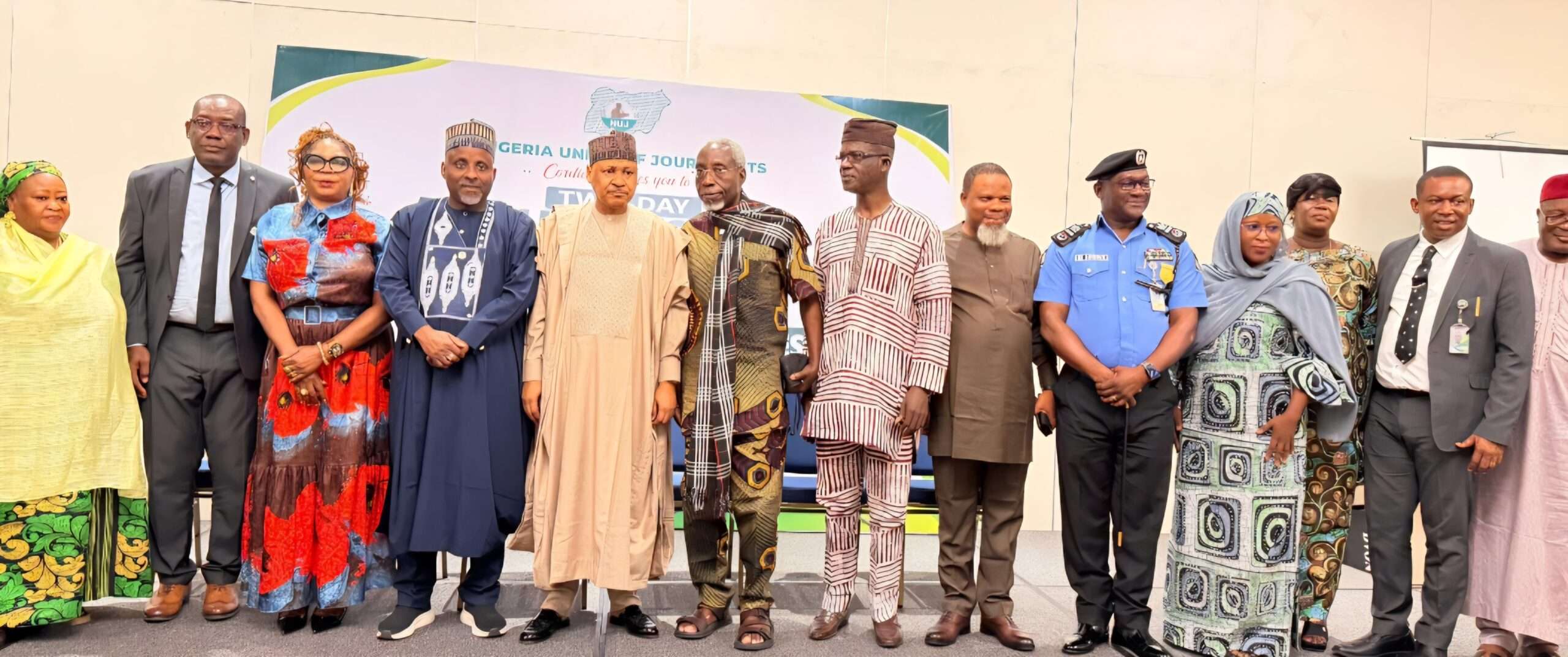
The summit, themed “Media and Security Agencies as Partners in Nation Building,” was organised by the Nigeria Union of Journalists and the Department of State Services.
It brought together security chiefs, policymakers, media executives, academics and civil society to address Nigeria’s evolving security challenges.
Minister of Information Mohammed Idris, who declared the summit open, said the timing was critical given threats from terrorism, violent extremism, cybercrime, organised crime, separatist agitations and disinformation.
“The relationship between the media and security agencies must be founded on mutual respect, professionalism, trust and an appreciation of their complementary roles,” Idris said.
He said President Bola Ahmed Tinubu’s Renewed Hope Agenda has prioritised security through military operations, intelligence gathering, technology and community engagement, with recent gains including neutralised terrorists and bandits, rescued victims, and upgraded surveillance.
Idris urged journalists to uphold professionalism and ethical standards, warning that misinformation could undermine national security efforts.
—NSA developing strategic communication framework—
National Security Adviser Nuhu Ribadu, represented by Special Adviser Chido Onumah, said security agencies and journalists must balance the public’s right to know with national security needs.
“We are all in this together. We must have a secure nation before we can effectively practise our professions and pursue national development,” Onumah said.
He disclosed that ONSA is developing a National Security Strategic Communication Framework to create a structured platform for information sharing, verification and collaboration, while reducing risks of reports that could aid terrorists.
—“Without media visibility, victories go unnoticed”—
NUJ National President Alhassan Yahaya Abdullahi said national security can no longer be left to security agencies alone. He called the summit the fulfilment of his pledge to build bridges between journalists and governance institutions.
Professor Okey Okechukwu of Nnamdi Azikiwe University said media visibility determines the impact of military operations. “Without media visibility, even major security victories could go unnoticed,” he argued, adding that journalism remains central to public understanding of security efforts and democratic governance.
The summit ended with commitments to deepen engagement, improve transparency, and operationalise the proposed communication framework.