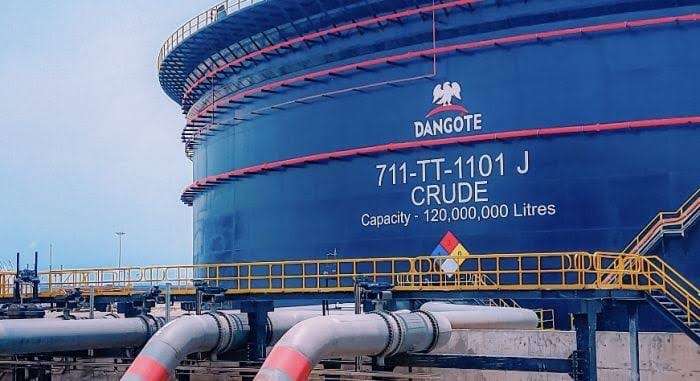
700,000-barrels-per-day plant to be East Africa’s largest refinery
NAIROBI— Dangote Industries Limited has commenced preliminary works on its proposed $17 billion, 700,000-barrels-per-day refinery in Kenya, marking the first major step toward what is expected to become East Africa’s largest refining project.
The company said the project had moved beyond planning. The site has already been selected, soil tests are ongoing, and engineering and design work is underway ahead of full construction.
According to Reuters, the refinery would be located on Lamu Island off the Kenyan coast. It is expected to take about three years to complete and will supply refined petroleum products to Kenya and neighbouring countries, reducing East Africa’s dependence on imported fuels.





—A Replica of Lagos—
Bloomberg reported on Tuesday that Aliko Dangote, President of Dangote Group, plans to build the refinery at an estimated cost of up to $17 billion as part of efforts to expand his refining empire into East Africa.
Citing a spokesperson for Dangote Industries Ltd., Bloomberg said the proposed refinery would replicate the company’s refinery in Lagos and process about 700,000 barrels of crude oil per day when completed.
“Billionaire Aliko Dangote personally pledged to the leaders of Kenya and Uganda that he would set up a replica of his 700,000-barrel-a-day refinery outside Lagos in East Africa,” the report stated. “The refinery would take about five years to build.”
Kenyan President William Ruto announced in May that Dangote would commence construction of the refinery this year.
—Why Kenya?—
Speaking to Reuters, Dangote Industries’ Vice President for Oil and Gas, Devakumar Edwin, said significant progress had been made.
“The site has been selected, soil tests are underway, and design and engineering work has commenced. Kenya was the choice from the beginning,” he told Reuters.
According to Bloomberg, Dangote said the coastal town of Lamu was selected “for commercial and technical reasons.” Tanzania had initially been considered before Kenya emerged as the preferred destination.
—Funding and Bigger Ambitions—
Devakumar disclosed that the refinery would be financed through a combination of internally generated cash, bonds, and proceeds from the company’s planned initial public offering.
He declined to state the exact cost, saying it would be comparable to that of the Lagos refinery. The Lagos refinery, built by Aliko Dangote, eventually cost more than $20 billion before commencing operations in 2024.
The Kenyan project is part of a bigger push. Dangote Industries is simultaneously doubling the capacity of the Lagos refinery from 700,000 bpd to 1.4 million bpd by 2028.
Edwin said the group’s total refining capacity will rise to 2.1 million barrels per day across Nigeria and Kenya.
He also announced plans to invest an additional $46 billion between 2026 and 2028 across refining, cement, and fertiliser businesses to accelerate industrialisation across Africa.
—Why It Matters for Africa—
For decades, Africa has exported crude and imported refined fuel due to inadequate refining capacity. Data from the African Petroleum Producers’ Organisation shows the continent exports about 75% of its crude while importing roughly 70% of refined products consumed.
The commissioning of the 650,000-bpd Dangote Petroleum Refinery in Nigeria has started to reverse that trend, cutting Nigeria’s fuel import bill and improving domestic supply.
The proposed Kenyan refinery is expected to strengthen East Africa’s energy security, deepen regional trade in refined products, reduce import dependence, and stimulate industrialisation.
Two senior terror commanders surrender to troops in Borno
Beyond Kenya, other African countries are moving too. In Mozambique, Benedict Peters is eyeing a 200,000-bpd refinery. Uganda is advancing plans for a 60,000-bpd refinery to serve Kenya and Tanzania.
The Lamu project represents one of the continent’s most ambitious downstream investments and could significantly reshape fuel supply dynamics in East Africa.