


When Akume was appointed SGF in June 2023, few could have predicted how well he would understand the assignment, and just how central his role would become. But the office he occupies is no ceremonial perch. It is the coordination engine of federal governance, the fulcrum upon which inter-ministerial harmony, executive-legislative alignment, and bureaucratic performance all pivot. Over the last two years, Senator Akume has not only understood this mandate, he has also embodied it, bringing decades of political and administrative experience to bear in the service of national stability.
· The architecture of order
President Tinubu’s tenure began amid immense expectations and inherited crises. From the abrupt removal of the fuel subsidy to the floating of the naira and the overhaul of Nigeria’s subsidy-laden social contract, the administration’s early days demanded meticulous policy coordination and institutional discipline. It was here that Akume’s steady hand became most visible, even as he resisted the temptations of flamboyance.
At the helm of the Federal Executive Council (FEC), he has managed a cabinet teeming with technocrats and political appointees, ensuring that policy decisions are not only taken but also translated into implementable actions. His stewardship of inter-ministerial collaboration has been marked by a kind of bureaucratic choreography: ministers aligned, agencies harmonised, national objectives pursued with fewer collisions than the Nigerian public sector is historically accustomed to.



To glimpse an idea of just how impactful Akume has been in his role, a May 2024 editorial in The Nation newspaper captured it aptly. The piece, entitled: “The Silent Anchor in a Sea of Change,” praised his “quiet efficiency and unshakeable steadiness” during some of the administration’s most turbulent months. According to the newspaper, Akume’s “quiet efficiency” allowed the administration to navigate stormy waters. During the volatile weeks following fuel subsidy removal, it was Akume who synchronised federal interventions, liaised with governors, and ensured that palliative measures reached the grassroots with urgency and clarity.
· Bridging divides, calming waters
Akume’s real genius may lie not only in his bureaucratic dexterity but in his political poise. As a former Senate Minority Leader and two-term Governor of Benue State, he understands the psychology of Nigerian politics. He speaks the language of legislators, reads the temperature of political rooms, and engages the judiciary with a tact borne out of institutional respect.
In a January 2025 Daily Trust newspaper feature entitled “Inside the Tinubu-Akume Accord,” a senior lawmaker described him plainly: “The SGF doesn’t impose; he negotiates.” The article credited Akume’s “backroom diplomacy” with the smooth passage of the 2024 Appropriation Act and other crucial economic frameworks. His presence has helped foster a rare harmony between the executive and legislature; an achievement made even more remarkable given Nigeria’s historically fractious governance culture.
His bridge-building extends beyond the capital. As a northern Christian in a southern-led government, Akume has been an essential voice in managing perceptions of inclusion. His unique cultural position, rooted in the Middle Belt, has made him an effective interlocutor between regional interests. From resource allocation debates to national security coordination, Akume has approached Nigeria’s centrifugal tensions with steady hands and open channels.
· Steering through firestorms
To be clear, the last two years have not been free of turbulence. Nigeria’s economy has groaned under inflationary pressures, the naira has fluctuated, and citizens have called for greater economic relief. Within the ruling All Progressives Congress (APC), internal fissures have threatened cohesion. Here again, Akume’s political maturity has been a stabilising force.
A March 2025 editorial in Leadership newspaper entitled “The SGF and the Soul of the APC” stated inter alia, “Akume’s political wisdom shields Tinubu from internal APC storms.” According to the newspaper, his quiet interventions behind the scenes had kept party rifts from boiling over into full-blown crises. One party chieftain described him as “the master of political peacekeeping,” a man who “steps in quietly to resolve tensions before they make headlines.”
His office has also maintained strict adherence to due process. Amid legal ambiguities and administrative challenges from procurement hurdles to federal appointments, Akume has leaned on a wealth of institutional memory and procedural rigour. In an era when the rule of law is often bent to fit political expediency, he has emerged as a respected guardian of legal and bureaucratic order.
· The man beneath the mandate
To understand Akume’s effectiveness is to understand the man behind the office. He is not a recent arrival to the corridors of power. His public service career spans decades. From serving as a permanent secretary to winning elections as governor and senator, this institutional depth has equipped him with a panoramic understanding of how Nigeria’s federal machinery works, and why it often stalls.
He is neither flamboyant nor populist. He courts consensus, not controversy. One senior aide to the SGF, speaking anonymously in a February 2025 Daily Trust feature, described him thus: “He doesn’t speak in thunder. He whispers when necessary, nudges where required, and moves only when movement matters.”
Akume himself once put it succinctly in an internal ministerial retreat: “Government should not be theatre. It should be focus, function, and follow-through.” Akume is also credited to have said, “We are here to solve problems, not perform them.” These memorable lines, now passed around in civil service circles, neatly sum up his governing philosophy.
Stories from his Benue constituency reflect this humility. Residents recall how, as governor, he visited hospitals unannounced, paid school fees for underprivileged students, and prioritised rural electrification long before it became politically trendy. In Benue politics, he is revered not because he demands loyalty but because he has earned it.
His Catholic (Christian) faith also shapes his moral compass. Known for personal discipline and integrity, he has steered clear of scandals in a system where such pitfalls are common. As one civil society observer noted in a March 2025 Punch report entitled “Governance by Example,” “You may disagree with the government’s economic choices, but you can’t fault Akume’s orderliness. He’s brought structure to an otherwise chaotic system.”
Considering that this is an age of loud politics and even louder personalities, Akume has shown that true leadership doesn’t need a megaphone. It needs a solid moral compass.
Moreover, in this political landscape often driven by optics, volume, and viral moments, Akume has instead become what the earlier mentioned editorial of The Nation described as “an unsung hero of the Tinubu era.” Where others sought limelight or soundbites, Akume stitched together policy frameworks, mediated behind the scenes, and ensured that the mechanics of governance never lost momentum. His interventions may not dominate the headlines, but they have left a visible imprint on how this government functions.
· A legacy still in motion
From The Nation’s description of his “quiet efficiency” to Vanguard’s framing of him as “the glue holding the bureaucracy together,” there is an emerging consensus across the media: Senator George Akume is a stabilising force. Not loud, not flashy, but profoundly necessary.
As Nigeria pushes forward with the Renewed Hope Agenda, the SGF’s role will only grow in significance. Akume’s legacy may not be embroidered in slogans or spectacles, but it is already being stitched into the fabric of Nigeria’s administrative rebirth. For a country yearning for leadership that listens, governance that works, and politics without theatre, Akume offers a model, not of perfection, but of purpose.
After two years as the SGF, the unsung hero sings not with noise, but with nationhood and the impactful possibilities of an assignment well understood.
■ Mr Ojeifo is publisher and editor-in-chief of THE CONCLAVE online newspaper. E-mail: ojwonderngr@yahoo.com (08034727013)








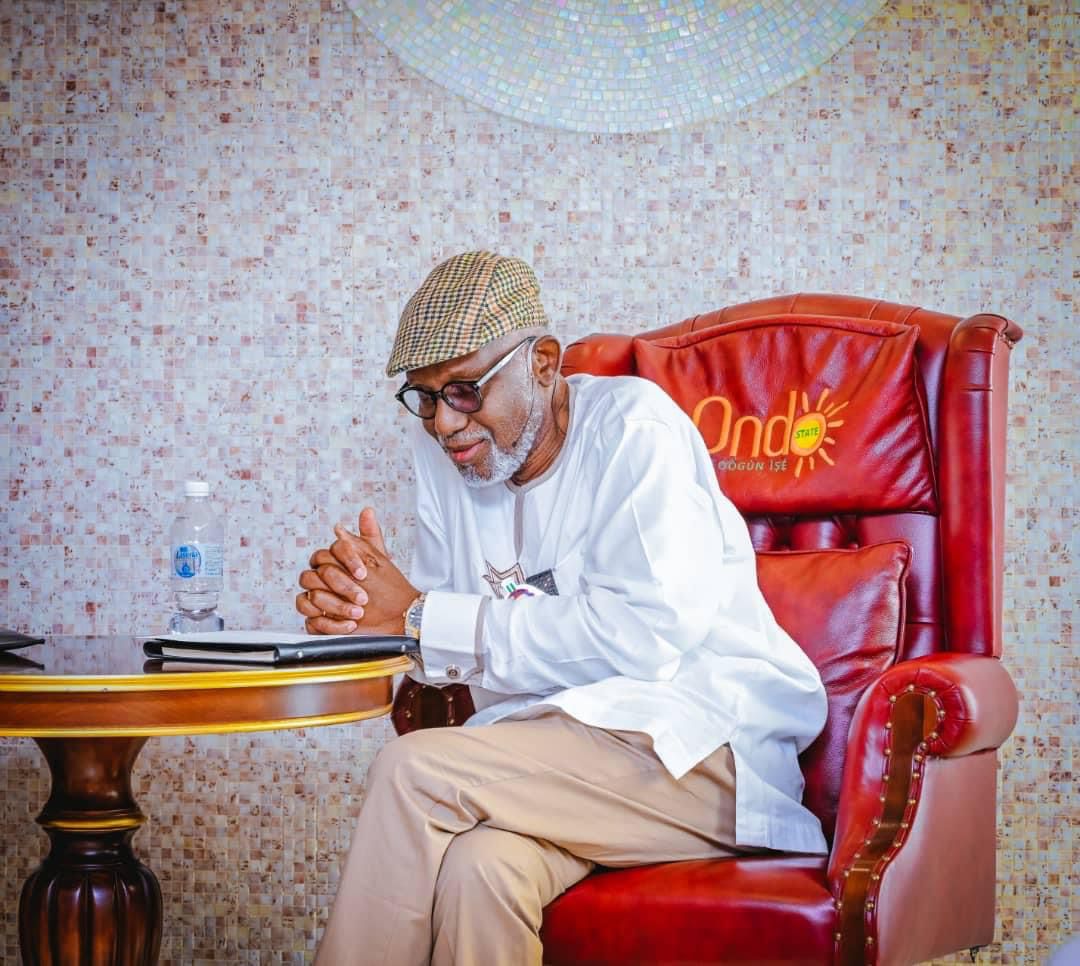




, is one such figure, a seasoned statesman whose understated presence has proven indispensable in the early years of the Tinubu administration.)