


“(Public) intellectuals are people who manage the world in their heads. They look at life and try to find some truth; if they cannot find it, they attempt to create it.” — Yair Lapid, Jewish centrist politician and Israeli opposition leader of the Yesh Atid Party.
In an age of diffusion, hyper-partisanship, populism, disinformation, misinformation, half-truths and alternative facts, the duty of public intellectuals has become more compelling than envisaged two decades ago. As social critics, public intellectuals set the template for how society is measured, navigated, and approached simultaneously. Similarly, the lenses public intellectuals create and the pathways upon which our world is (de)constructed are essential to the degree how which our cosmos becomes mundane evenly. Through the lenses of public intellectuals, society is remodelled and reset, specifically on the salient and most critical issues and the essence of society and life itself. A misdiagnosis of public policy and issues, either by pseudo-experts or public intellectuals themselves, may lead us to unintended consequences in society.
Through deliberations and cross-fertilisation of ideas, public intellectuals help us gauge our socio-cultural being, and in the long run, help us trigger and initiate economic and political freedom in a sense. Their logical thoughtfulness over the centuries has remained a centrepiece and guidepost for our collective existence and commitment to humanity. Even in the midst of partisan divide, public intellectuals open a new vista of social (re)engineering within the public sphere, while also shaping public policy within governmental circles. In history, the Florentine Philosopher, Niccolo Machiavelli, comes to mind as the most visible and audacious public intellectual of the Renaissance Age.
In his treatise, documented in his book The Prince, Machiavelli illustrates and illuminates what is known today as modern political thought, philosophy, including leadership, politics, administration and the compass upon which modern states are governed. Today, far from the medieval eras of Machiavelli, contemporary public intellectuals dominate our airwaves, television screens, newspapers’ columns and even our digital spaces. These layers, for the most part, make (de)constructing or gauging a public intellectual a more daunting task.





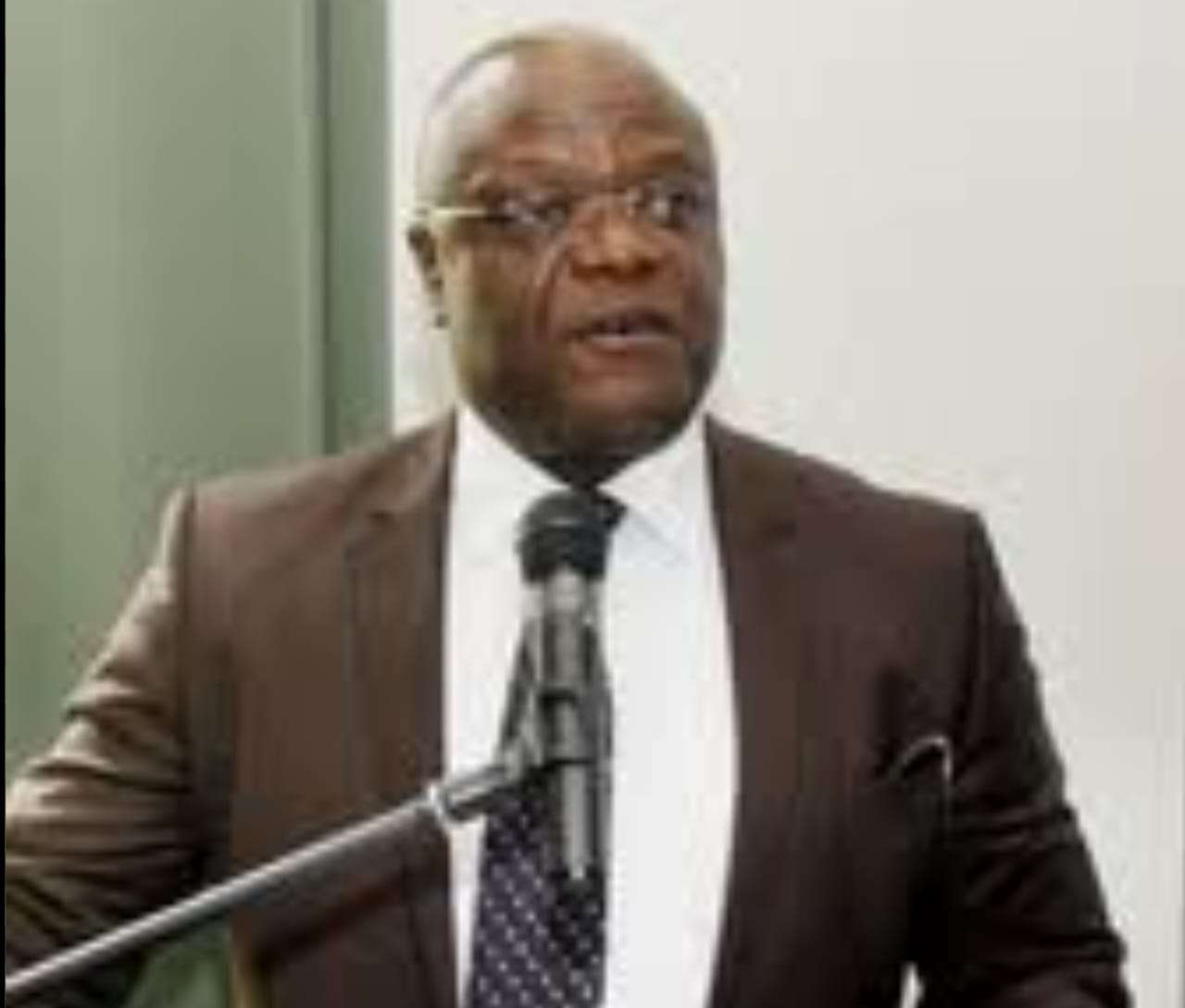
However, no gauge of a public intellectual is completely impeccable or perfect-proof. For Professor Abiodun Adeniyi, a professor of communication and Registrar of Baze University, Abuja, who celebrates his sixty birthdays today and Golden Jubilee, distilling public issues and raising national consciousness on issues of national importance is a rare privilege that ought to be handled with the supreme example of measured intellect and profound logic.
In an age where deliberations and public discourse are often wrapped around divide and rule: us vs them, in-your-face political punditry, and uncivil commentary fostered by quackery and lack of critical thinking and nuances, Prof Adeniyi’s public engagement as a social critic is distinct in various ramifications. Often, Adeniyi’s analytical compass on national television is mostly not induced by the zest for antagonism or to yield to partisan activism, or he surrenders his thinking cap to the many palaces of sycophancy that now dominate our political domain and social sphere.
As a public intellectual, Adeniyi is adept at the very calling of a public philosopher, whose fundamental duty and essence is to tilt society through debates, conversations, elucidation and utmost clarity to the realisation of truth and the ever-evolving social dynamics. These realisations, for over two decades, have been expanded through various layers and channels of mainstream media and other agencies of communication. Within himself, Adeniyi strode several strands of expertise, craftsmanship and professionalism. He is firstly, a journalist, strategist and communication consultant, teacher, academic, scholar and an administrator.
The combination of these experiences as a pool of expertise sets Adeniyi apart as a public intellectual with all the tools essential for social (re)construction of society. With them (experiences), Adeniyi can navigate the confines of technocracy and civil society in a sense that acquaints him with both the logics of professional know-how and the whimsies of social activism. For all these threads, there is a historical path and trajectory that crystallise into today’s one of Nigeria’s most visible public intellectuals within the mainstream media and the broader public sphere.
First, in the early 1990s, after his graduation from Ahmadu Bello University (ABU), Zaria, with a degree in Sociology, Adeniyi would kick-start his professional calling when he joined Today Newspaper, a Kaduna-based daily. He later joined The Guardian Newspaper, one of Nigeria’s flagship newspapers. After a stint with The Guardian, Adeniyi would later win the prestigious Chevening Scholarship to study International Communication at the University of Leeds. He later added to his studies by pursuing doctoral studies, finally earning a PhD in Communication. On his return in the early 2000s, Adeniyi would pick up the job of communication consultancy, where his clientele of organisations included the World Bank, ECOWAS, Bureau of Public Procurement (BPP), European Union (EU), USAID, DFID, among other multilateral agencies across the board.
On public policy, Adeniyi, who was born on December 31, 1965, has been very instrumental in setting some templates on how the state ought to shape policy that is people-centric and builds on the institutional objective of addressing challenges and fulfilling public good. In that light, Adeniyi was a key stakeholder in shaping the strategic communication of the Federal Ministry of Humanitarian Affairs’ disaster and risk management. He has also supported the strategic communication models of the National Bureau of Statistics in driving home how national data on socio-economic lives is communicated to the citizenry.
More importantly, Adeniyi, as the deputy chairman of the committee, was also a key player in the formulation of the National Values Charter, where national values became the centrepiece of President Bola Ahmed Tinubu’s National Orientation Agency (NOA) national values project. The professor of communication’s role was also part of the retooling of the NOA’s national values, which later dovetailed into the statutes between the state and citizens, now christened 7 for 7.
On the academic front, when Adeniyi ventured into the classroom and lecturing in 2013, he consolidated on his vast experiences in journalism, civil society and consultancy to expand his epistemic scope and lens. From then, he would later be appointed the head of the department of mass communication, Baze University, Abuja. In 2021, he was elevated to the position of a full professor by the university management. He was also appointed Deputy Dean, Dean of the Post Graduate School. In January 2025, Adeniyi was appointed registrar of Baze University, combining academics and administrative roles simultaneously.
In academic research, Adeniyi has led several projects and has now created a niche for himself by espousing and expanding the frontiers of diasporic communication. Beyond producing international peer-reviewed publications, Adeniyi’s much-awaited book, “New Hidden Narratives of African Migration: Exploring Media and the Contestation of Place” (Palgrave Macmillan), is due next year to coincide with his Diamond Jubilee anniversary. As the Israeli Centrist Politician, Yair Lapid, postulated in the opening quote, as a public intellectual, Adeniyi’s instincts for exploring life, seeking truth, and even attempting to create it aptly align with the contemporary agenda for truth. As he marks his sixty birthday and Diamond Jubilee, his admirers, far and near, send him Diamond Pearls. And may God Almighty continue to be with him.
• Obi is a lecturer, journalist and researcher based in Abuja.















%20intellectuals%20are%20people%20who%20manage%20the%20world%20in%20their%20heads.%20They%20look%20at%20life%20and%20try%20to%20find%20some%20truth;%20if%20they%20cannot%20find%20it...)