With the ban on the 2027 election campaigns lifted on August 19, Nigeria has effectively entered another politically charged season. Interestingly, just before the commencement of the campaign period, President Bola Ahmed Tinubu directed members of his Cabinet, as well as heads of Ministries, Departments and Agencies (MDAs), to engage Nigerians and account for their stewardship since the administration assumed office on May 29, 2023.
In practical terms, this amounts to an indirect mobilisation of the electorate and an effort to communicate the administration’s record to Nigerians as the 2027 general elections draw closer.
However, I find it somewhat puzzling that such a directive was not issued much earlier in the life of the administration. Instead, the responsibility for communicating the government’s policies and achievements appears to have rested largely with its media team, which, whether by omission or commission, has often been more reactive than proactive.
This may partly explain why a significant segment of Nigerians feels disconnected from the administration’s policy direction. A section of the electorate has remained insufficiently informed because the government’s agenda, reforms and accomplishments were not consistently and aggressively communicated to the public from the outset.


Now that the administration has begun showcasing its achievements more vigorously, the effort is certainly welcome, even if belated. After all, it is never too late to enlighten the citizenry, particularly with more than 100 days still remaining before the presidential election scheduled for January 2027.
With the notable exceptions of the Minister of the Federal Capital Territory, Nyesom Wike, and the Minister of Works, David Umahi, few members of the government appeared to have consistently and systematically taken their mandates, activities and accomplishments to the Nigerian public.
That should not have been the case. A government has an obligation not merely to formulate policies but also to explain them to the people, demonstrate their relevance and communicate the results of their implementation. Citizens cannot be expected to support what they neither understand nor appreciate.
This is an area where the administration could learn from the United States. President Donald Trump and his Press Secretary, Karoline Leavitt, regularly engage the American public and the media in explaining and defending the administration’s policies. Such sustained communication makes it more difficult for political opponents to define the administration’s agenda for it or distort its policies.
The point, therefore, requires little further elaboration. At this critical juncture—less than 150 days before the presidential election—the Tinubu administration has suddenly found it expedient to explain its policies, programmes and accomplishments to Nigerians, with ministers and heads of MDAs now appearing more frequently in the media to make their case.
There is an old anecdote about a lawyer who so disliked advertising and the media that he refused to use either to promote his struggling law firm and attract clients. He persisted in this attitude until the firm eventually collapsed financially, leaving him with no option but to sell it.
Ironically, when he eventually needed a buyer, he had to advertise the firm for sale. The advertisement attracted a prospective buyer, and the firm was ultimately sold.
The lesson from that anecdote is self-evident: when you fail to communicate your value, someone else may define you—or your fate—for you.
For the Tinubu administration, the lesson should be clear. Effective governance is not only about implementing policies; it is also about communicating them continuously, transparently and convincingly to the people whose lives they are intended to improve.
As the 2027 campaign season unfolds, the administration may therefore need to ensure that its communication strategy is not merely a campaign-season exercise, but a sustained engagement with Nigerians.
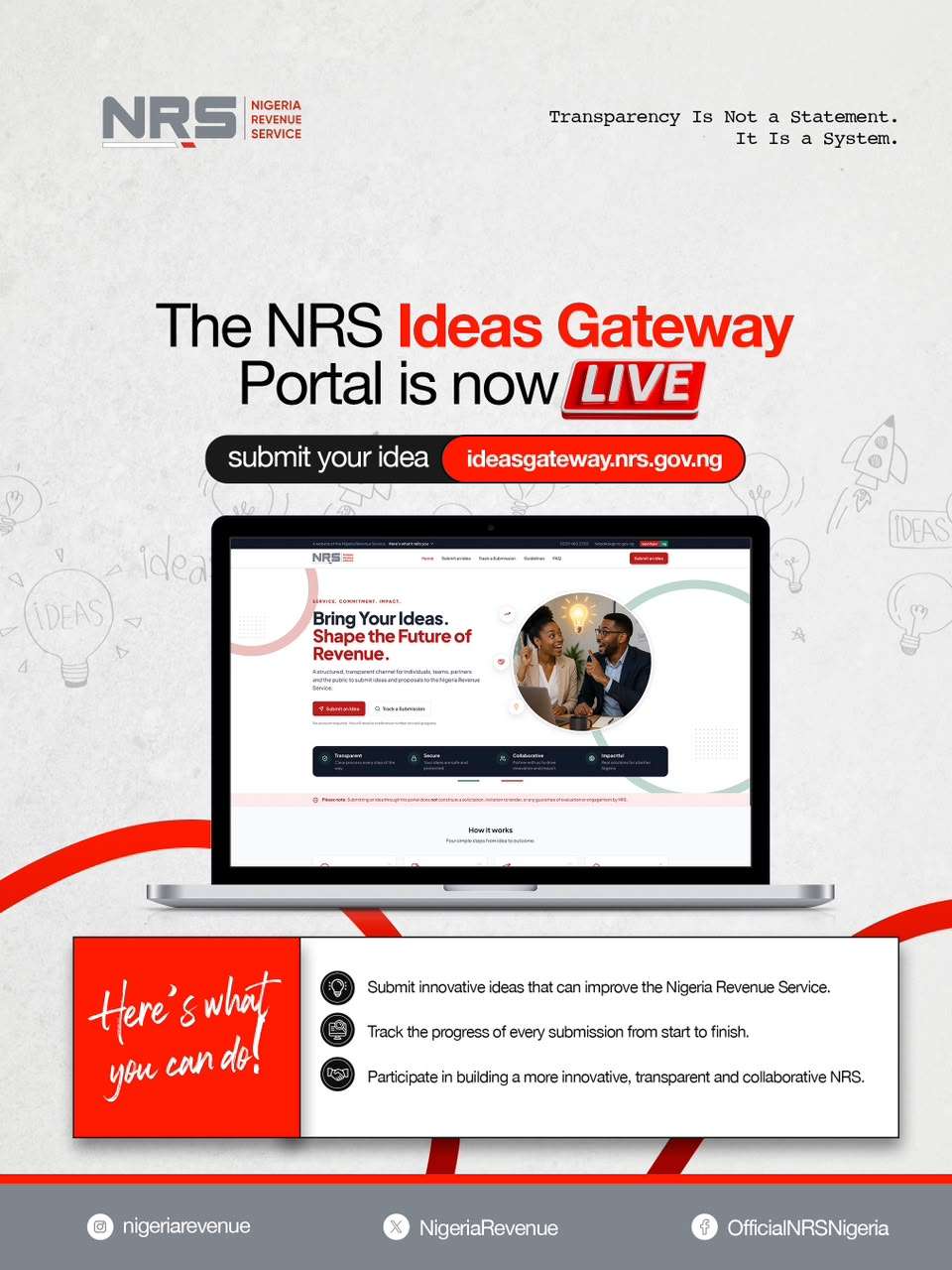
Meanwhile, in response to President Tinubu’s directive, public office holders have embarked on a flurry of media engagements aimed at explaining the policies and accomplishments of their respective institutions. One notable example was the interview Channels Television’s Seun Okinbaloye conducted with Mr. Zacch Adedeji, Chairman of the Nigeria Revenue Service (NRS) and Nigeria’s tax czar, on August 9, 2026.
Asked about government spending and allegations of lavish lifestyles amid widespread economic hardship, Adedeji offered several explanations, saying:
1. “Mr. President goes from home to office on foot, not even driving except when he is going to the airport. I don’t know where you see the convoy.”
2. “The President eats once a day.”
3. “In the last three months, he has not even left the shores of this country.”
4. “How much is an Escalade that the President of Nigeria cannot afford? Please don’t embarrass this country.”
Adedeji made these remarks in an attempt to counter allegations that President Tinubu lives an extravagant lifestyle. His central argument was that the President “does not live an extravagant lifestyle despite the privileges attached to his office.”
However, the somewhat whimsical nature of some of the responses suggests that, while Adedeji may be highly proficient as an accountant and tax administrator, communicating complex issues to the public through mass media may not necessarily be his strongest suit. Perhaps, with the benefit of hindsight, he would have been better served by media and communications professionals before undertaking such a high-profile television interview.
After all, the interview was undertaken in fulfilment of President Tinubu’s directive that heads of public institutions should take their policies, programmes and accomplishments directly to Nigerians, particularly as the country moves into the 2027 electoral season.
Predictably, given that Nigeria has effectively entered a season of political campaigning—a period that can be characterised by political tension, opportunism and, at times, anomie—video clips from the interview began trending across social media. They soon became fodder for the political theatre that typically accompanies election seasons, when politicians and their supporters seize upon every statement that can be turned into political ammunition.
While the media ordeal appeared to overwhelm Zacch Adedeji, the experience has been markedly different for the Minister of Finance, Taiwo Oyedele, who is also an accountant but has proved to be an interviewer’s delight. Oyedele has demonstrated an unusual ability to engage journalists in substantive conversations with remarkable candour and intellectual agility, almost as though he were simultaneously a professor of finance and communication.
That quality is reminiscent of the media performances of Dr. Ngozi Okonjo-Iweala when she served as Finance Minister under President Olusegun Obasanjo between 2003 and 2006, as well as Dr. Kalu Idika-Kalu during the administration of General Ibrahim Babangida from 1986 to 1992.
Meanwhile, as if unwilling to be left out of the early political manoeuvring ahead of the 2027 elections, former Vice President of Nigeria and 2027 presidential candidate of the African Democratic Congress (ADC), Atiku Abubakar, on August 13—just days before the campaign season formally opened on August 19—personally went to a High Court in Abuja to depose to a suit seeking to prevent President Tinubu from contesting the 2027 presidential election.
The suit was reportedly predicated on an allegation concerning a purportedly forged National Youth Service Corps (NYSC) certificate allegedly submitted to INEC in connection with the 2023 and 2027 elections.
In an article I published in this column two Tuesdays ago, following the public upbraiding of President Tinubu by Catholic bishops who visited him at the Aso Rock Villa, and his forceful rejection of the allegations of bad governance levelled against his administration, I recalled the story of two Second Republic politicians from the Middle Belt—Joseph Tarkah and Godwin Daboh—whose fierce political rivalry frequently brought them into confrontation.
It is recalled that, during one of their fiery verbal exchanges, Daboh was reportedly said to have told Tarkah: “If you Tarkah me, I Daboh you.”
The anecdote was intended to remind Nigerians that religious leaders, particularly the Catholic Bishops’ Conference, have historically engaged in disagreements and confrontations with occupants of Aso Rock Villa. Such encounters have occurred across different political eras, including the military administrations of Generals Ibrahim Babangida and Sani Abacha, and democratic administrations under Presidents Goodluck Jonathan, Muhammadu Buhari and now Bola Tinubu.
To contemporise that memorable political quip, I drew a parallel with the feud arising from the once-celebrated godfather-godson relationship between Nyesom Wike, former Governor of Rivers State and current Minister of the Federal Capital Territory (FCT), and his erstwhile political godson, Siminalayi Fubara, the current Governor of Rivers State.
Their relationship eventually deteriorated into a bitter political confrontation, providing the perfect contemporary setting for a coinage inspired by the famous “If you Tarkah me, I Daboh you” episode of the Second Republic.
Following that public spat between former allies, which ultimately resulted in the political annihilation of the godson, I coined the expression in the article I referenced earlier: “If you Fubara me, I will Wike you.”
In much the same vein, the aftermath of what can best be described as an ongoing war of attrition between former Vice President Atiku Abubakar, the ADC’s 2027 presidential candidate, and President Bola Ahmed Tinubu can be given a similarly playful political twist.
The rivalry between the two dates back to the 2023 presidential election, when both men pursued their respective ambitions to succeed the late President Muhammadu Buhari as the occupant of Aso Rock Villa, Nigeria’s seat of presidential power.
Now, as the 2027 electoral season unfolds, the longstanding feud between Atiku and Tinubu appears to be intensifying, both through increasingly combative exchanges and through legal action in the courts. Against that backdrop, a fitting political quip might be: “If you Atiku (attack) me, I will Tinubu (attack) you.”
Without mincing words, my coinage for the renewed war of words between the ADC aspirant for Aso Rock Villa in 2027 and its present occupant is intended to introduce some comic relief into an already tension-soaked political atmosphere—one that is likely to become even more charged as election day, January 25 next year, approaches.
If nothing else, my recollection of past political “catfights” is intended to remind political actors that elections come and go, while the principal actors of each political era eventually leave the stage—and, ultimately, this world.
There is therefore no justification for turning elections into a do-or-die affair, as some past leaders have done, with the notable exceptions of the late President Umaru Musa Yar’Adua and former President Goodluck Jonathan.
As the 2027 general elections enter the final stretch, marked by the mandatory 150-day countdown to when Nigerians will cast their first ballots for presidential, senatorial and House of Representatives candidates, President Tinubu’s principal challenger, former Vice President Atiku Abubakar, has thrown down the gauntlet with a bombshell announcement that he would reverse the consequential policy of petrol subsidy removal.
That declaration has shifted the focus of the campaign from a potentially prolonged courtroom battle—which Atiku triggered by suing Tinubu over an allegation concerning the authenticity of his NYSC certificate—to a more issues-based contest.
Yet, remarkably, none of the three leading contenders—Tinubu, Atiku Abubakar and Peter Obi, representing the APC, ADC and Labour Party respectively—has, at this stage, presented Nigerians with a comprehensive manifesto.
Nor had any of them constituted a formal campaign council until the APC unveiled a 75-member council a few days ago. President Tinubu has also had to respond directly to his ADC challenger following Atiku’s bombshell declaration that he would repeal the petrol subsidy removal policy if elected president.
There is no doubt that what initially appeared to be an unpopular declaration—“petrol subsidy is gone”—which Tinubu made in his inaugural address on May 29, 2023, has become something of an albatross around his administration’s neck.
This is largely because a critical mass of Nigerians has attributed much of the hardship they have experienced over the past three years to the removal of the petrol subsidy.
Yet President Tinubu, despite the policy’s unpopularity throughout the more than three years of his administration, has remained metaphorically steadfast, refusing to reverse course.
Perhaps recognising the political vulnerability created by the policy, the African Democratic Congress (ADC) presidential candidate, Atiku Abubakar, has chosen to capitalise on the economic hardship associated with subsidy removal by promising Nigerians that, if elected president in 2027, he would reverse the policy and restore a form of petrol subsidy.
The proposal was made during an interview with the BBC Hausa Service, and it appeared to resonate with a significant segment of Nigerians, particularly the talakawas—the downtrodden and economically disadvantaged population across Northern Nigeria, where poverty remains endemic and distressingly high.
His choice of a mass-media platform with such extensive reach among the talakawas appears strategically calculated. The BBC Hausa Service provides access to a significant political constituency that Atiku is seeking to mobilise in pursuit of his presidential ambition.
While many Nigerians at the lower end of the socioeconomic ladder readily connected with the message because they perceive petrol subsidy removal as a major source of the economic hardship crushing them—even though the Tinubu administration continues to insist that the pain is temporary—another segment of the population, particularly those more conversant with economic policy and development, has pushed back against the proposal to reverse the subsidy-removal regime.
Perhaps in response to this resistance, Atiku’s initial promise to reverse fuel subsidy removal has subsequently been softened into a commitment to modify the policy if elected president in 2027.
The adjustment in messaging may have been facilitated by the fact that the original campaign message was delivered in Hausa rather than English, leaving room for nuance and interpretation. Consequently, it has become possible for his campaign to argue that he did not necessarily promise to restore the old subsidy regime but rather to reform or modify the way the subsidy-removal policy is implemented.
Presumably, the ADC presidential candidate, following a series of brainstorming sessions with his campaign team, arrived at the decision to make the reversal or modification of the nearly four-decade-old subsidy regime a central plank of his campaign.
That regime, which has been associated with enormous government expenditure, is cited as one of the factors contributing to Nigeria’s economic difficulties. During the final years of the subsidy regime, a staggering sum estimated at more than ₦4 trillion was reportedly expended on subsidising petrol.
As stated earlier, Atiku probably arrived at this strategy because of the palpable unpopularity of subsidy removal among a significant segment of the electorate.
However, after testing the waters and gauging public reaction to his dramatic departure from his position during the 2023 presidential campaign—when he supported the removal of the subsidy—and apparently realising that the proposal was not as universally popular as he may have anticipated, the campaign began recalibrating its message.
This may also have followed President Tinubu’s criticism of his ADC challenger, whom he described as economically uninformed.
The campaign subsequently sought to clarify that what Waziri Adamawa actually meant was not that he would restore the old petrol subsidy regime, but that he would retain the subsidy-removal policy while modifying its implementation. It further sought to emphasise that Atiku’s principal concern was how the funds saved from subsidy removal have been utilised.
That swift recalibration of his position is politically deft. Hopefully, we will see more such adjustments in the coming days and months as politicians settle into the 2027 general-election campaign season.
After all, in politics, words matter—and during an election campaign, a slip of the tongue can have significant consequences for a candidate’s chances at the polls.
In keeping with the conventional wisdom that “there is nothing new under the sun,” it is worthwhile to compare Waziri Adamawa’s 2027 presidential strategy with those adopted by presidential candidates in other parts of the world.
Consider the United States, for instance. In the run-up to the election that returned Donald J. Trump to the White House—making him the “45th to 47th President”—Trump sought strategic advice on identifying the issues that would most powerfully resonate with American voters.
Steve Bannon, a prominent strategist and podcaster associated with Trump, was among those who helped shape that thinking. One of the key messages was that a tougher immigration policy and stronger measures to keep undocumented immigrants out of the United States would appeal to a significant segment of the American electorate.
The strategy ultimately proved highly effective. Trump successfully tapped into voters’ frustrations and aspirations through his familiar “Make America Great Again” (MAGA) message, helping propel him back into the White House with a decisive victory over his Democratic opponent, Kamala Harris.
A broadly similar approach is now being attempted in Nigeria by the ADC presidential candidate, Atiku Abubakar, with his proposal to reverse or modify the removal of the petrol subsidy. However, unlike Trump’s immigration message, the strategy does not appear, at least for now, to have struck the bull’s-eye.
One possible explanation is that, although the removal of the petrol subsidy by the Tinubu administration has caused considerable hardship for millions of Nigerians, a segment of the population has also come to accept the reform as a necessary component of broader economic restructuring.
This includes reforms associated with the Petroleum Industry Act (PIA), which have contributed to creating the investment environment that has enabled the Dangote Refinery to emerge as a major player in Nigeria’s petroleum industry. The refinery is potentially an important component of the transition from a consumption-driven economy to a production-oriented one.
Consequently, a significant number of Nigerians, particularly supporters of the ruling All Progressives Congress (APC), appear prepared to endure what the government describes as temporary economic hardship in the expectation that the reforms will eventually produce broader prosperity and are therefore willing to give the incumbent a second term.
Consider what might have happened to Nigeria’s fuel supply without the Dangote Refinery at a time of major global disruptions. The Russia-Ukraine war, tensions involving the United States, Israel and Iran, and the possibility of disruptions around the Strait of Hormuz could have created even greater pressure on petroleum supplies.
Beyond Afrobeats, Nollywood and Nigeria’s sporting achievements, the emergence of Nigeria as an exporter of refined petroleum products rather than merely crude oil represents a potentially significant economic development.
Even Saudi Arabia, home to Saudi Aramco and one of the world’s largest oil industries, has reportedly sourced aviation fuel from the Dangote Refinery. Beyond other African countries, countries as far away as Japan have also reportedly sourced petroleum products from Nigeria.
The question, therefore, is: should Nigeria jeopardise such an emerging reputation and opportunity on the altar of political expediency?
That reality, however, does not invalidate the ADC presidential candidate’s decision to build a substantial part of his campaign around petrol subsidy removal, which has clearly become something of an albatross around the Tinubu administration’s neck.
For Atiku and his campaign team, the promise to reverse the policy appears to be a potentially powerful electoral proposition because subsidy removal remains one of the biggest sources of public anger against the Tinubu administration.
Thus, Atiku Abubakar’s proposal to lift what many suffering Nigerians perceive as the burden imposed by Tinubu’s 2023 subsidy-removal decision initially looked like a masterstroke—a political slam dunk capable of attracting voters to him like butterflies to nectar.
But unless the ADC presidential candidate can convincingly explain how his proposed alternative would work better than the current policy, scepticism is likely to persist.
This is particularly important because the subsidy regime is not a new phenomenon. Government intervention in the pricing of petroleum products dates back decades and was progressively institutionalised and strengthened by successive administrations. Over time, the subsidy system became deeply embedded in Nigeria’s economic and administrative structure, making it extremely difficult for successive occupants of Aso Rock—military and civilian alike—to dismantle it.
President Tinubu eventually broke with that tradition when he announced the removal of the petrol subsidy on May 29, 2023.
For decades, subsidising Premium Motor Spirit (PMS) at the pump benefited not only Nigerians but also consumers and businesses in neighbouring countries. Cheap Nigerian petrol was routinely smuggled across borders, where motorists in other West African countries could purchase it at significantly lower prices than would otherwise have been possible.
One notable consequence of subsidy removal has been the sharp decline in the economic incentive for PMS smuggling, since the price differential that made the illicit trade so lucrative has largely disappeared.
Because smuggling provided income and employment to a significant number of people, albeit through an illegal component of the shadow economy, Atiku’s proposal could naturally appeal to those whose livelihoods were linked to that activity.
But the more important question is: How large is that constituency?
Even when those operating within the shadow economy are combined with the so-called talakawas, it is questionable whether they constitute a sufficiently large bloc to determine the outcome of a presidential election.
What is therefore required is greater public enlightenment. Nigerians who, because of inadequate communication about the administration’s reforms, may believe that a consumption-driven economy sustained by subsidised petrol is their only route to economic salvation need to be exposed to the alternative vision of a production-driven economy.
The funds previously committed to petrol subsidies—estimated in some accounts at about ₦4 trillion—could instead be deployed to productive investments, including roads, bridges and other infrastructure, as well as higher education through the Nigerian Education Loan Fund (NELFUND), thereby expanding opportunities for young Nigerians and addressing some dimensions of unemployment and job insecurity.
The ongoing media engagements by ministers and heads of Ministries, Departments and Agencies (MDAs), following President Tinubu’s directive that public officials should explain their policies and achievements to Nigerians, therefore represent a step in the right direction as the 2027 elections approach.
In my view, and as some development strategists have also argued, the removal of petrol subsidy can only work in favour of the long-suffering Nigerian masses if it is accompanied by strong structural interventions rather than a reliance on palliatives alone.
These interventions should include targeted financial support for the poorest Nigerians, subsidised Compressed Natural Gas (CNG) mass-transit buses, and even free conversion kits for commercial taxis.
Such measures are already being implemented, with the CNG programme reportedly absorbing substantial public resources. The challenge now is to ensure that these interventions translate into tangible reductions in the cost of living and transportation for ordinary Nigerians.
But CNG alone has proven insufficient to address the scale of the economic hardship confronting Nigerians. Therefore, the government needs to redesign and deploy more effective forms of succour to lift the spirits of despondent and crestfallen Nigerians whose economic frustrations have left them disillusioned.
As we all know, prosperity does not always trickle down from the top quickly enough for ordinary citizens to feel its impact. Thus, even when a country’s economic fundamentals are improving through stronger foreign-exchange earnings and rising reserves—as is reportedly the case in Nigeria, where reserves have increased substantially—and GDP growth has reached about 4% while inflation is trending downward, the benefits may not yet be visible in the daily lives of the masses.
This disconnect helps explain the continuing despondency among Nigerians. Food inflation, in particular, has remained stubbornly high, according to recent National Bureau of Statistics (NBS) data. Insecurity has also prevented many farmers from cultivating their land, while the deteriorating condition of roads, particularly during the rainy season, makes the transportation of food from farms to markets more difficult and expensive.
These challenges are compounded by high fuel prices, which feed directly into transportation costs and, consequently, the prices consumers pay for food and other essential commodities.
Against this backdrop, the government’s resort to Compressed Natural Gas (CNG) as a fallback measure to cushion the socioeconomic consequences of petrol subsidy removal is understandable. Given the central role petrol plays in Nigeria’s economy, the increase in its price has had a multiplier effect on the cost of living. It is therefore clear that CNG, while useful, cannot be the only solution. Other interventions are required to cushion the impact of high energy and transportation costs on ordinary Nigerians.
A review of the government’s intervention through the Presidential CNG Initiative (Pi-CNG) indicates that more than $1 billion has reportedly been mobilised or committed to the rollout of CNG as an alternative to petrol and diesel.
A breakdown of the reported investments between 2024 and 2025 provides an indication of the scale of the intervention.
1. Investment in the CNG Sector
* About $450 million has reportedly been invested in the CNG sector, covering infrastructure, conversion centres and related platforms.
* More than $1 billion has reportedly been invested in the broader CNG sector as of 2025.
* Approximately $1.02 billion was reportedly mobilised specifically for the CNG vehicle-conversion programme.
* More than $2.5 billion has reportedly been committed to the broader clean-transportation programme, including CNG and electric vehicles (EVs).
2. Specific Federal Government Budgetary Commitments
* ₦36 billion was earmarked for 30,000 CNG conversion kits to be distributed free nationwide, amounting to approximately ₦1.2 million per vehicle, including conversion costs.
* An estimated $890 million has been identified as the investment required to develop the necessary CNG infrastructure.
3. What the Presidential CNG Initiative Is Delivering
Launched in 2023 following the removal of the petrol subsidy, the Pi-CNG programme has recorded several developments:
* Conversion centres: The number has reportedly increased from seven to 265 nationwide.
* Vehicles converted: The number reportedly rose from about 4,000 to nearly 100,000 in just over a year. The Federal Government has stated that approximately 120,000 vehicles have so far been converted, with a target of one million vehicles by 2027.
* Refuelling stations: Several stations are operational, with many more under construction or development. The broader objective is to establish as many as 500 integrated CNG refuelling stations nationwide.
* Employment: More than 10,000 direct jobs have reportedly been created, with a projection of 30,000 jobs.
* Infrastructure: A high-capacity CNG station has been established in Abuja, reportedly serving more than 1,100 vehicles daily, while the CNG Industrial Park in Ajaokuta has also been expanded.
4. The Expected Benefits
According to the Federal Government, CNG could reduce petrol imports by as much as $4.4 billion annually and cut transportation costs by up to 40%. CNG is reportedly available at around ₦200–₦250 per SCM, compared with petrol prices of approximately ₦750–₦1,000 per litre.
Encouragingly, the Federal Government has reportedly invested more than $450 million directly, while the total amount mobilised with private-sector participation is estimated at between $1 billion and $2.5 billion.
Some of the major investments have commendably been structured through public-private partnerships (PPPs), with companies such as the Dangote Group reportedly investing $280 million, Arita LNG $28 million, alongside contributions from other private-sector participants.
As impressive as these figures appear on paper, however, the reality on the ground is that the interventions have yet to significantly alleviate the economic pain experienced by a critical mass of Nigerians.
That may explain the argument advanced by the ADC presidential candidate, Atiku Abubakar, that petrol subsidy removal has effectively deprived Nigerians of what he regards as one of the principal benefits of being an oil-producing country. He has also argued that the financial savings accruing to state governments are allegedly being spent on projects such as flyovers and airports, rather than on security and other interventions that directly affect the welfare of citizens.
In my view, security remains one of the most pressing concerns of Nigerians. As NBS data continue to indicate, food inflation has not sufficiently declined, and I have previously argued that insecurity is one of the major reasons farmers are unable to cultivate their land, grow crops and harvest enough food to meet national demand.
It is therefore imperative that governments invest more aggressively in security infrastructure driven by technology, intelligence gathering and artificial intelligence. Such investments could have a direct and positive impact on the lives of ordinary Nigerians.
President Tinubu himself has repeatedly urged leaders at the subnational level to prioritise investments that directly improve the welfare of their people. It is therefore important for the Federal Government to lead by example and accelerate efforts in this direction.
Indeed, I would urge Mr. President to convene a conference of APC governors for a strategic brainstorming session on how the substantial revenues now flowing to the states can be deployed more effectively to improve the lives of ordinary Nigerians.
Such a gathering should also prioritise the fight against insecurity, which ought to occupy the highest rung of the government’s priority list. Security should arguably take precedence over projects such as flyovers, airports and roads that do not directly address the most urgent needs of the people.
To genuinely improve the lives of Nigerians at the lower rungs of the socioeconomic ladder and reduce the hardship weighing them down, the government must also look beyond CNG.
Since the CNG initiative, despite the huge resources committed to it, has not sufficiently transformed the transportation experience of the critical mass of Nigerians who depend primarily on motorcycles and tricycles, the government should consider investing in the local assembly of these alternative means of transportation.
It is time to create acquisition and ownership pathways for the those in the lower rung of ladder of society via incentives/subsidies in the manner the US gave subsidies to Americans to purchase Tesla EVs from Musk’s company as path of its policy to replace fossil fuel powered vehicles with EVs.
As earlier highlighted, about $1 billion has reportedly been mobilised or committed to the CNG programme, yet high transportation costs remain a major burden on Nigerians.lf Nigeria invests in electric motor bikes and tricycles to be operated by existing ‘Okada’ riders, serving the critical mass of Nigerians that rely on that mode of transportation, that would be a bottom up approach easing the pains of fuel subsidy removal as opposed to waiting for the trickle down of wealth from the top which has proven to be elusive and equivalent to the fable ‘waiting for the ‘goddot’.
A public-private partnership model, perhaps inspired by the Dangote Refinery experience, could be adopted to establish modern tricycle and motorcycle assembly plants across the country’s geopolitical zones.
Nigeria has done this before. In the past, vehicle assembly plants operated in different parts of the country, including Volkswagen in Lagos, Peugeot in Kaduna, Steyr trucks in Bauchi, Mercedes-Benz in Enugu and Leyland trucks in Ibadan.
The problem with the old model was that many of these plants were government-owned, just like the country’s four crude-oil refineries, making them vulnerable to inefficiency, political interference and eventual decline.
My proposal is fundamentally different. The new plants should be private-sector-driven, commercially viable and professionally managed, drawing lessons from successful enterprises such as the Nigeria Liquefied Natural Gas (NLNG) operation in Rivers State and the Dangote Refinery in Ibeju-Lekki, Lagos.
Subsidy, in itself, is not necessarily a bad economic instrument. The real issue is what it is used to subsidise.
If public funds are deployed to support productive ventures such as vehicle assembly plants that create employment, develop local capacity and expand the country’s productive base, the subsidy can ultimately generate economic value. The same principle applies to borrowing: loan financing is beneficial when it is invested in ventures capable of generating sufficient income to repay the debt and create additional economic value.
The United States provides an interesting example. The government provided incentives for electric-vehicle manufacturers, including Tesla, as part of its broader effort to accelerate the transition from fossil-fuel-powered vehicles to electric mobility.
Although such policies undoubtedly contributed to the growth of Tesla and the enormous wealth created for Elon Musk, the United States also pursued a wider national objective by encouraging cleaner transportation and reducing dependence on fossil fuels.
I cite the US-Tesla example to illustrate how government support can be strategically deployed to empower the private sector while simultaneously achieving clearly defined national objectives.
Nigeria should consider adopting a similar approach.
Several indigenous vehicle manufacturers and assemblers, including Innoson Vehicle Manufacturing, are already operating in the country, yet local manufacturers still face the challenge of inadequate government patronage.
For example, many vehicles used by the Presidency are sourced from Asian, American and European manufacturers. The same is largely true of the National Assembly and state governments and their Houses of Assembly.
How can Nigeria’s emerging vehicle-manufacturing industry develop into a globally competitive sector if the government, arguably the country’s largest institutional consumer of vehicles, does not lead the way in patronising local manufacturers?
The official cars of the UK,US,Germany,France, ltaly and Chinese leaders are made in those countries.
If government supports Innoson Motors and Nord motors assembly plants in Nigeria, its boosting the economy and creating employment and not necessarily enriching the promoters and investors.
China’s BYD has emerged as a global leader in electric vehicles, while Tesla remains dominant in the American EV market. Government incentives, industrial policy and domestic patronage have played important roles in building successful automotive industries in both countries.
There is no reason Nigeria cannot adopt a similar strategy to stimulate domestic manufacturing, create jobs for its large army of unemployed young people and ultimately help banish poverty from the land.
The same principle can be applied to electricity generation.
The Geometric Power plant in Aba, Abia State, established by Prof. Barth Nnaji, a former Minister of Power, provides an example of how private-sector investment can transform local electricity supply. The plant has helped power industries in the region and improve electricity availability in parts of Abia State.
A similar model could potentially be replicated across Nigeria’s six geopolitical zones, if not in all 36 states.
This is particularly important following constitutional and legislative changes that have expanded the role of subnational governments in electricity generation and distribution, thereby creating opportunities for state governments to participate more actively in the sector.
Rather than concentrating resources primarily on airports, flyovers and roads to nowhere—as President Tinubu has previously criticised some state governments for doing—states could invest more aggressively in productive infrastructure such as electricity, security, transportation and industrial development.
ln light of the current intolerable state of insecurity in our country, priotize investments in the security of lives and properties
I have raised all these issues in this piece for one principal reason: to redirect the conversation during this campaign season away from mundane and often divisive issues such as certificates, ethnicity and religion and towards the more consequential question of how to make Nigeria prosperous through increased productivity.
The issues discussed here are ultimately about production, employment, infrastructure, security, energy and economic empowerment.
My hope is that these arguments will challenge political office seekers to think beyond electoral rhetoric and concentrate on practical solutions to Nigeria’s problems.
If this piece succeeds in provoking that conversation, then its purpose will have been served.
■ Magnus Onyibe, an entrepreneur, public policy analyst, author, democracy advocate, development strategist, an alumnus of the Fletcher School of Law and Diplomacy, Tufts University, Massachusetts, USA, a Commonwealth Institute scholar, and a former commissioner in the Delta State government, sent this piece from Lagos.